It’s fair to say that the farms in the Bjorkdale district of Saskatchewan in 1925 were pretty isolated. Which is probably why no one paid much attention to the fact that Captain Allison Day left his family in October of 1925, and failed to return. It happened sometimes. Husbands left their wives and families, looking for better opportunities elsewhere.
It wasn’t until two years later that the community began to suspect that something was amiss. In the spring of 1927, Captain Day’s wife passed away from natural causes, leaving her three sons, Robert, Alfred and Henry, and her daughter, Caroline, to carry on running the farm.
That same summer, a young district farmer named Max Sinnes worked with the boys on the farm. According to him, Henry told him a very disturbing story. He confessed that his father, Captain Day, had never left, but in fact had been murdered by his mother, and he and his brother Robert had helped her cover it up.
The Regina Leader-Post – April 27, 1928
These stories made their way to the provincial police, and the case was assigned to Corporal Watson and Constable Knight of the Melfort detachment. With the information they received, they arrested the three brothers in April of 1928 for complicity in the murder of their father and the brothers were taken to the provincial jail at Prince Albert to await trial.
A preliminary hearing was launched on May 10, 1928 at Tisdale before Magistrate Lussier. Multiple witnesses were called, including Max Sinnes, who recited the story he’d heard from Henry Day. According to Sinnes, Henry told him that “Ma plugged Old Day,” going on to tell him that his mother had shot Captain Day through the head with a revolver while he was sleeping. Apparently, it had made an awful racket. His mother had then gone upstairs to get Henry and his brother Robert (Alfred was away helping a neighbor at the time) and told them she’d fixed ‘Old Day.’ They’d gotten out of bed and taken the body to a straw stack near the granary and fired the stack with him inside. He told Sinnes that the family was glad after the shooting. At the time of his arrest, Henry was only 16-years-old, while his brother Robert was 20, making them 13 and 17 at the time of the shooting.
Caroline Day, sister and youngest child in the Day family (just 14-years-old at the time of the hearing), was also called to the stand. She admitted that she knew her mother had shot their father, stating that “Mother told me she had shot Dad and had burned the body,” going on to say that her mother warned her not to tell anyone. She’d kept that promise until the day she testified. She told the court that she’d seen her dad on the evening of October 22, 1925, and the next morning her mother told her that she’d killed him.
Captain Allison Day had moved to the Bjorkdale district from Macoun, SK in the spring of 1919. His wife was in the hospital at the time, but followed a few months later. He had a reputation of being a first class workman and had been held in high repute in the Imperial army, having served in the Boer War and worked as a recruiting officer. According to his neighbors, he had a distinct military bearing at all times and was described as a good talker and a “jolly companion to meet.”
But Captain Day had a dark side. According to his children, he treated them all brutally, but especially their mother. Caroline told the court that her father “treated Mother mean and pounded her an awful lot.” He’d split her forehead once in 1923, and according to Caroline and her brothers, was persistently cruel, saying that their mother lived a life of misery.
The Saskatoon Daily Star – May 10, 1928
Edward Lilley, a neighboring farmer, saw Captain Day frequently and testified that three weeks after his disappearance, he’d asked Mrs. Day what happened to her husband. She said she hadn’t heard from him. He confirmed that he’d seen Day hit his wife more than once. On one occasion, he’d seen him throw her out of the stable and throw the milking stool after her.
Corporal Watson also took the stand, to detail the arrest and the confession that Henry and Robert had given the police. Apparently, Robert and Henry had talked it over together on the way to the station and decided to tell the police everything.
According to Henry, it had happened much the way that Max Sinnes described it. His mother had awakened him and Robert after the shooting and they’d come downstairs to help her move the body. Their father was in bed, his face covered in blood, with blood on the sheets and the floor. They cleaned up and carried the body from the bed to a wheelbarrow Robert brought to the door. They’d taken the body and the bloody bed clothes to a straw stack near the granary. They’d had an awful time loading and transporting the body, as it kept falling off the wheelbarrow. Eventually they made it to the stack, and they’d shoved the body as high as possible on the straw stack before Robert set it on fire. Their bad luck continued, as the body would not burn. Robert eventually took a pitch fork and pushed the body higher on the straw stack.
As they were waiting and watching, a car was seen making its way to the house. Mrs. Day, Robert and Henry ran from the stack back to the house. It was W. L. Hayes, another farmer of the district, bringing Alfred home. He asked for Captain Day and Mrs. Day told him he’d gone away for a few days. When he left, the boys returned to the fire to keep watch and see that the body burned. However, when the fire went out, they noticed a number of bones in the ashes. Robert took them to the house in a pail and his mother burned them in the heater. According to Henry, the family had all known that their mother was going to kill Day, on account of Caroline. This reasoning was never elaborated on, so it’s unclear if they were trying to protect the youngest from the abuse, or if there was something even darker going on.
In either the fall of 1925, or the spring of 1926, Mrs. Day had sold the Colt .45 automatic revolver she’d murdered her husband with to Frank McIntyre of Star City, SK. The family kept the secret until their mother passed away, when it seemed Henry and possibly Robert, began to let the details slip.
At the end of the preliminary hearing on May 10, 1928, Magistrate Lussier dismissed the charges of conspiring to commit murder against Henry, Robert and Alfred. Henry Day was, however, committed to stand trial, charged with being an accessory. Lussier stated that Robert would be sent to receive medical attention as a “mental incompetent.” (This was something hinted at in previous articles as well. It’s possible Robert had brain injuries from the abuse Captain Day allegedly heaped on his family while growing up, or possibly he was born with disabilities from abuse to his mother while pregnant, but we’ll never know.)
The Saskatoon Daily Star – May 11, 1928
Henry Day was taken back to the Prince Albert jail to await his trial, but was released on December 19, 1928, when the prosecutor made his recommendations to the department of the attorney general that no further action be taken against the accused.
And that is the story of the mysterious disappearance of Captain Allison Day.
Information for this post came from the following issues of the Regina Leader-Post, the Saskatoon Star-Phoenix, and the Saskatoon Daily Star: April 27, 1928, May 9, 1928, May 10, 1928, May 11, 1928, May 12, 1928, Dec 27, 1928
I recently had the great pleasure of being a guest on the podcast, ParaGhoul Paranormal: Discoveries from the Dark, hosted by Keely Kulpa. (You can listen to it here or watch it here.) On the episode, I told the story of the murder of Scotty McLachlan at Beechy, SK. I’ve told this story on my website before (here), but over the past year I’ve done a deep dive on the case. I was lucky enough to receive police reports and transcripts of the preliminary hearing from the provincial archives, as well as the Coroner’s Inquest report, all of which revealed more details about the crime and the people involved.
I’ve rewritten the story of the McLachlan murder, but be forewarned: this is a long one! So, without further ado, I give you:
The Mind Reader and The Murderer
The Saskatoon Star-Phoenix – December 15, 1930
On the evening of December 10, 1930, the residents of Beechy were excited, despite the freezing cold.
Performing at the hall was ‘Professor’ Henry Gladstone, a self-described mind reader and water diviner. A former Vaudevillian who’d gone by the stage name ‘Professor Mem-O-Rea, the Mental Marvel’, Gladstone was tall with a pointed gaze and a striking level of self confidence.
The Calgary Albertan – March 10, 1922
The story he told reporters was that he was born late in the night, with a caul over his face, in Lancashire, England in 1888. He proudly stated that he was the seventh son of a seventh son and a direct descendant of former British Prime Minister, William Ewart Gladstone. Unlikely, as the man’s seventh child had no children. There was also certainly no proof he’d attained any academic credentials worthy of the title ‘Professor’. Either way, Gladstone’s well-cultivated mystique seemed to be working for him as he entertained his audience in Beechy. As part of his act, he invited members of the audience to put questions to him mentally, which he answered without them having to utter a word.
It was during this portion of the show that Gladstone pointed at a member of the audience, a man named William Taylor.
“The man you are thinking of was murdered. There was foul play and the body will soon be found.”
Murmurs and whispers filled the hall as William Taylor admitted he’d been thinking about James S. McLachlan, or Scotty, as he was known in the district. Scotty had disappeared in January of 1928, supposedly leaving for British Columbia, but no one had heard from him since and he’d left horses, equipment and belongings behind.
Also in the audience was Constable Charles E. Carey of the RCMP. He’d been in charge of the Beechy detachment for the past four and a half years and had been investigating the disappearance of Scotty McLachlan since December of 1928. At Professor Gladstone’s pronouncement, he felt a small spike of excitement. He’d never given up on the case. In fact, he’d just reached out in October to Detective Sergeant C. C. Brown in Saskatoon for assistance. He felt sure that if another investigator questioned people in the district, someone would let slip some small detail that would help break the case.
Gladstone pointed at Carey, where he sat with Constable Kelly. “And you’ll be with me when I find the body.”
The hall filled with the dull roar of whispered exclamations. Rumors and gossip were sure to flood the community after Gladstone’s assertions, and Carey realized he had a golden opportunity. All that talk was bound to make someone nervous. The time was ripe to make further efforts to clear up the McLachlan matter. He just needed a little help.
On December 12th, he once again reached out to Detective Sergeant Brown and this time he was successful. Brown informed him that Detective Corporal William John Woods was en route to Beechy to assist him.
Woods arrived in Lucky Lake that evening and Carey was there to greet him. He told him about Gladstone’s pronouncement at his show and pointed out that he was giving a performance at the local hall in Lucky Lake that night. They may as well go to the show and interview him afterwards.
After some discussion, they agreed they had nothing to lose and potentially everything to gain in asking Gladstone to accompany them through the district as they re-interviewed the various locals connected to the case. Whether his gift was real or not, perhaps his presence would result in a lead.
Gladstone was only too glad to have the chance to assist the police. After all, it wasn’t his first time helping authorities locate a body. He claimed to have found 120 bodies lost to water in Canada, one such body being that of Alexander McDonald in Alberta’s Red Deer River in 1924. The old miner had been missing for six months and Gladstone correctly predicted where they’d find his remains, in a swirling eddy downriver from a railway bridge. His methodology included bread and limestone. He would stick a piece of limestone in bread and drop it into the water, following it along the current until it stopped or swirled in a specific spot.
It was more of a neat bit of science than psychic ability, but either way it seemed to work.
Gladstone was quite confident that McLachlan’s body would be found on his old farm. He told Carey and Woods that he would very much like to go to the farm and walk around to see if he could get a hunch or a feeling.
Scotty’s farm had been rented to him by a man named Olaf Evjin. It had originally belonged to Scotty, but he’d lost it through a tax sale. Evjin had bought it from the municipality in 1926 and let Scotty rent it with the intention of selling it back to him. In 1927, Scotty took on a partner named John Schumacher, who lived on the farm with him and still farmed there.
Scotty didn’t have much in the way of family. He’d come to the district in 1914. Six years later his wife died and his two kids became wards of a family named Moore in the Herbert district. He had a sister, Mary Heron, in Vancouver, but that was it. At the time of his disappearance he was in his mid to late 40s.
The group decided to go out the following morning, on December 13th, to begin their interviews. The plan was for Woods to do most of the questioning while Gladstone stayed in the background, ready to give them the benefit of any thought impressions he might get as a result of the answers given.
Their first stop was at the farm of Sam Berton in the Coteau Plains district. He was away. Next, they drove to the home of Oscar Lindman, a good friend of Scotty’s, but he was away as well. Undeterred, they went to see Earnest Hagemeister at his place.
Carey had been informed by Oscar Lindman and Abe Penner in previous interviews that Hagemeister had heard John Schumacher utter threats against Scotty McLachlan. Hagemeister always denied this, but Carey suspected there might be some truth in the claim.
For about 15 minutes, maybe more, Woods closely questioned Hagemeister about the alleged remarks Schumacher made against Scotty. Hagemeister flatly denied any memory of telling anyone such a thing. Woods told him Penner was ready to swear to it, but Hagemeister was unmoved.
Gladstone suddenly interrupted the interrogation, looking directly at Hagemeister and saying, “I’ll tell you exactly what his words were on that occasion. He said, ‘I’ll kill that Scotch bitch before he leaves the place.’”
Further, he informed Hagemeister that he was sick in bed with pneumonia at the time.
After hedging for a minute or two, Hagemeister finally admitted that Gladstone was right. Schumacher had said something to that effect and he had been sick in bed at the time. He didn’t have pneumonia, but a bad chest cold and had been worried it was pneumonia.
Carey and Woods were quite startled by this demonstration of Gladstone’s ability. Feeling more confident in their decision to include him, they continued onward with a few more interviews before arriving at what was now known as the Schumacher farm.
They left Carey, who was in uniform, in a quiet spot on one of the side roads and Woods and Gladstone drove on to the farm. They were posing as two water diviners in case Schumacher happened to be home. They weren’t ready to question him yet and didn’t want to spook him.
They went to the house and asked for one of the neighbours, pretending to be on the wrong farm. Schumacher and his wife were away, so they were greeted by a hired hand, Schumacher’s young brother-in-law. Woods explained that they were looking for water, that Gladstone was a water diviner and would be able to find it, if they could have a walk around the property.
When the hired hand gave them the go ahead, they began to explore the yard. Gladstone led them over to the barn, then away, before returning to the barn again. In several spots Woods had to take Gladstone’s arm, as he was partially blind.
On their third and final return to the barn, Gladstone began sniffing the air loudly, telling Woods he could smell something. Woods told him he was crazy. He couldn’t smell anything. “I have as good a smeller as you have.”
“There’s something funny here,” Gladstone responded. Before he could say anything else, the hired hand joined them and they ceased conversation.
Gladstone led them down to the well below the barn, still acting strange and preoccupied, murmuring that there must be another well that wasn’t being used or something.
From there they walked to the house and warmed themselves at the stove, chatting with the young man before telling him they’d be back later in the day.
As soon as they left the farm and returned to Carey, Gladstone shared his impressions.
“There has been trouble there for Scotty. McLachlan has been killed at the barn and is buried nearby.”
He was emphatic that McLachlan was killed in the barn or else buried under the floor in the barn. He claimed something told him that the old well had some connection with the murder as well. Despite Woods and Carey’s fear that the body had been burned, he was adamant that the body was buried on the land and that the barn figured into it in some way.
At about 4:00 p.m. they returned to Beechy to interview Abe and Pete Penner before returning to the Schumacher farm. When they went back, John Schumacher was still not home. It was dark as they drove back to Beechy, but about three or four miles outside of town, they met an old Ford truck on the road, driving without any lights.
Carey immediately had a gut feeling that Schumacher would be in that truck and turned the car around, catching up to it and pulling it over.
Woods got out of the car and went over, asking if one of the men inside was John Schumacher. When the passenger identified himself as such, Woods called him out of the truck and asked if he would have any objections to returning to Beechy with them.
He told Schumacher he’d been brought in to assist in making a very thorough investigation into the disappearance of McLachlan, and naturally, he was forced to start with John as he was the last person to see him alive. He told him that they’d already been to his farm twice and been looking over the place very carefully.
As Woods gave his explanation, Schumacher grew visibly nervous. He agreed very willingly to accompany them back to Beechy, once they’d settled on how he’d return home when they were finished, but the whole time his speech was halting, his nervousness palpable.
Now, Constable Carey had obviously interviewed Schumacher multiple times since Scotty’s disappearance. The first interview was on December 8, 1928. At the time he received no hesitation from Schumacher, who told him about renting a half section of land from McLachlan in the spring of 1927. He’d lived on the farm with Scotty until about February of 1928 when Scotty left. He told Carey that Scotty left in the morning, dressed in his work clothes, a combination of blue overalls, heavy stockings, ordinary light rubbers and a sheep-lined Mackinaw. Scotty hadn’t told him where he was going, but all winter he’d been talking about going to B.C., so he assumed that’s where he went. He’d left a fairly good grey suit and some old clothes behind, taking a blue suit and a few other things with him in a sack.
He told Carey about how McLachlan had lost his lease to the farm. His landlord, Olaf Evjin hadn’t been happy with how little Scotty was getting out of the land and had approached Schumacher to let him know that he would be terminating Scotty’s lease and he could have it instead if he wanted, about two weeks before Scotty left. He’d bought all the equipment from Scotty, giving him $150 in cash and a promissory note for another $200 to be paid at the end of the season.
He hadn’t heard from Scotty since he left and had no idea where he was.
Carey interviewed him again on February 4, 1929, mostly about the various rumors circulating through the community. People were suspicious. Schumacher had traded a cow that was apparently Scotty’s to an E. Westlund in the district, as well as sold a few of Scotty’s horses. Schumacher told Carey he’d bought the cow and a heifer from Scotty in the summer of 1927 for forty dollars cash. The horses, he said, were his. As for the household goods? He bought them from Scotty before he left.
He couldn’t help it if people liked to talk, he told Carey. And that was that. There was no reason to hold him, no evidence that spoke to murder.
John Schumacher joined them in their car and Carey drove to the detachment office in Beechy. They went into the office and sat around the table, Gladstone taking a spot in the corner.
Woods took charge of the interview. He told Schumacher that they could produce a man who would swear that he’d made a threat to kill Scotty. He pointed out that Schumacher had sold property belonging to Scotty, and that they had a witness who’d seen him burn a set of Scotty’s false teeth. All true.
Schumacher gave only vague answers. He maintained his story that Scotty had left and he had no idea where he’d gone.
This went on for about ten to fifteen minutes, with Gladstone occasionally interjecting with a question of his own. It was beginning to feel as though the interview was going nowhere, when Gladstone stood up and snapped his fingers.
“The barn, yes, I’ve got it.” He turned to Carey and Woods. “Now, gentlemen, I am going to tell you just what took place out there. Scotty went to the barn, all right. There was a blow struck. Scotty fell down, he was murdered. The body was buried. It is still there, someplace near an old well.”
No one said anything. The room was silent for a minute or two, then Carey spoke up. “Well, John, you understand we cannot force you to tell us anything unless you want to, but if you desire to tell us–” he got up and retrieved a sheet of paper and pencil and laid them on the desk. “If you want to tell us about this, there is a paper and there is a pencil.”
Nothing more was said for another minute, the silence growing as Schumacher sat with his head down, his eyes on the floor. He began sniffling, then broke down and started sobbing.
“Oh my wife and my baby! Will they hang me?”
Woods shook his head. “I can’t say. I don’t know the facts of the case. If you want to tell us, of your own free will, I could better tell then.”
He cried for a few more minutes, nothing more being said, until Woods asked, “well, what about it, John? Do you want to tell us something?”
Schumacher nodded through his sobs. “Oh! I’ll tell you everything.”
Gladstone moved to the door.
“Well, gentlemen, I have to go or I’ll be late.” Nodding at Woods, he exited the room.
Woods placed John Schumacher under arrest, telling him he was charged with murder and gave him the full warning. He told him he could write down his statement on the paper.
“I can’t write very good. Can I tell you and you write it for me?”
Woods nodded. “Can you write your name?”
“Yes.”
At this point, Carey needed to leave to drive Gladstone back to Lucky Lake for that evening’s performance. Woods sat down next to Schumacher and after warning him again that he was under no pressure to tell them anything, nodded at him to go ahead and give his story.
This is the statement John Schumacher gave:
I cannot write myself, so I am asking Corporal Woods to write this down for me. I knew James S. McLachlan and we were living together on Olaf Evjin’s farm during the winter of 1927-28. I had a quarrel with him in the summer of 1927 over store bills. He tried to run up on me without my permission. We didn’t come to blows that time but he threatened to hit me with the frying pan. Olaf Evjin told me during the winter that he was going to rent the place to me. McLachlan would have nothing more to do with it. When McLachlan heard about this he accused me of getting him put off the place and finally sold me his stock and said he was going to leave. I paid him $150.00 cash and gave him a note for the balance which was over $200.
One morning, sometime in January, 1928, Scotty McLachlan came home. I think I was eating breakfast when he came in and said he was leaving. I went out to the barn and left him in the house and a little while afterwards he came out to the barn and started to quarrel with me. I don’t remember what words were said but he finally called me a bastard and grabbed a scoop shovel and made a rush at me. I was cleaning manure out with a four-prong pitchfork at the time and when he swung the shovel at me with the intention of killing me in the head, I swung the pitchfork and hit him over the side of the head once. He fell down and stayed there. I was scared and ran to the house, but I didn’t stay there a minute but ran right back to the barn. McLachlan was still laying there. I shook him but he didn’t wake up. I was so scared I didn’t know what to do and as I had no witnesses to the quarrel, I was afraid to tell the police and finally decided to bury the body. I left it for an hour or so in the barn and then dragged it out by one hand, I think to a manure pile below the well and covered it up with manure. I never searched the clothes on the body at all before putting it in the manure pile and did not touch it anymore than I could help. I didn’t feel for his heartbeat or anything like that as I was in a panic and didn’t know what to do. I haven’t put any more manure on this pile since or touched it in anyway but as far as I know the body must be still there. I am willing to go out tomorrow and show the police where I put it. I don’t think I have the pitchfork I killed McLachlan with, as I think I lost it off a load of hay last summer. I had no intention of killing McLachlan when I hit him with the pitchfork as I was only defending myself and I knew he would hit me with the shovel if I didn’t stop him. This is the whole true story of the reason for Scotty McLachlan’s disappearance and I am telling it of my own free will and desire to clear the matter up.”
Signed, John Frank Schumacher.
Carey returned from Lucky Lake at about 9:00 p.m. that night, and found Woods and Schumacher in the office, talking. Schumacher had finished giving his statement and Carey read it over. He started to read it aloud to Schumacher, but he shook his head.
“Corporal Woods read it over a couple of times to me.”
“Is all this true, John?”
“Yes.”
Carey nodded. “And is that your signature?”
“Yes.”
Woods and Carey took Schumacher to a cell. That night he slept like a baby.
The next morning, Sunday, December 14, 1930, Woods, Carey, Schumacher and a guard named Harry Payne they’d hired to watch over him, got into the police car and drove out to the farm.
As the car pulled to a stop east of the barn, Woods glanced at Schumacher.
“Where abouts is this pile, John?”
He pointed at what looked like a heap of snow. “It’s under there.”
“There’s a manure pile under that?”
“Yes, it’s under all that I buried him.”
They took Schumacher to the house and left him under the care of Harry Payne, the two handcuffed together. Woods and Carey went down to join the troop of volunteer diggers. Most of the community had turned up to watch the excavation, including Henry Gladstone. Among the diggers were Oscar Lindman, Sam Welch, Pete Roos and Al Weston.
The manure pit was east and a little bit south of the barn. Before the digging could begin they had to get through an estimated foot and a half of ice and snow. They dug with picks and shovels for about forty-five minutes, chipping away at the frozen manure with no luck as the crowds of people huddled against the cold, watching. With no sign of the body, Woods trudged back up to the house to see if he could convince Schumacher to come down and give them more direction.
But Schumacher didn’t want to go down and face the crowd. He looked at Woods and shook his head. “Please spare me that.”
“All right, John. We will try and find it without you if you don’t want to go down there.”
It was around this point that a man came into the house, agitated and upset, coming to stand in the doorway of the bedroom, where Woods was standing in front of Payne and Schumacher, who were sitting on the bed.
“What do you want?” Woods asked.
“I want to find out all about this.”
Woods looked him up and down. “Who are you?”
“I am his brother-in-law.”
“You better ask him, then.” Woods motioned at Schumacher and went out of the room.
Schumacher’s brother-in-law, Ivald Westlund, stepped inside the bedroom and sat down on a trunk across from the bed. “John, is this all straight goods? Is it true you did this?”
Schumacher sat with his head down, his gaze focused on the floor. After a moment he slowly lifted his head and said, “I guess it is.”
Ivald was silent. He sat on the trunk, obviously quite upset, and stared at the window for a while. Finally, he looked at Schumacher.
“My God, man. How could you carry on here?”
John Schumacher looked up at the ceiling, the silence lengthening. “Well, it has been pretty hard.”
Meanwhile, the digging was still progressing, but with no results. After another twenty minutes, Woods again returned to the house and asked Schumacher to come down.
This time he relented and Woods brought him to the dig site.
“You are in the right spot. The manure pile is not very big. He’s there, you’ll get him if you dig long enough.”
The manure pile was indeed not very big, only about ten feet by ten feet. And it was not long after Schumacher was brought down to verify the location that a piece of sock showed through the manure.
The digging operation slowed down considerably as they very carefully began chipping and scraping away at the manure with their hands so as not to damage the remains. Carey was especially anxious that no injury should be done to the head.
The feet were uncovered first, then slowly the rest of the body began to come into view.
“Yes, we’ve got Scotty,” Oscar Lindman murmured. “Looks like his clothes, anyway.”
They chipped around a fair-sized piece of frozen manure at the top of the body, making sure to stay far enough back from the skull that no damage should be done. As they gently lifted the manure, it released and the skull came up with it, so embedded in the frozen manure that it separated from the body.
The Saskatoon Star-Phoenix – December 16, 1930
Informed of the discovery, Schumacher asked Carey if they’d found anything else.
“What do you mean?”
“Well, I mean the one hundred and fifty dollars.”
There was no sign of it. If it had been there at all, it had most likely disintegrated.
When the remains were fully exposed, it was between 11:00 and 11:30 a.m.. The Coroner, Dr. G. G. Leckie of Lucky Lake, was called and jurors summoned to view the remains.
The body was badly decomposed, with not much flesh left outside of a skeleton and clothes. It was lying on its back, with the left arm down at its side and the right arm lying across the chest.
All the woolen clothes were in a good state of preservation, but all the cotton portions, including seams, had completely disintegrated.
The body was very carefully lifted onto an old door and loaded onto a truck. It was brought into Beechy by Sam Welch, accompanied by Mr. Morgan and Pete Bradick. They took it to a building that stood on the corner in the north end of the village that used to be an old Red and White store with a butcher shop attached.
Constable Carey was waiting for them and took custody of the body. Harry Payne was once again employed as a guard, this time over the remains, until Dr. Walker Stewart Lindsay, a physician, surgeon and professor of pathology at the University of Saskatchewan, arrived to conduct the post mortem examination.
Dr. Lindsay was a serious looking man with glasses and a moustache. He’d joined the University of Saskatchewan in 1919 and for the next three decades played a pivotal role in the education of the province’s doctors. To say he was held in high respect would be an understatement. He created the Department of Bacteriology at the invitation of Walter C. Murray, the president of the University. His laboratory, housed in one of the greenhouses, was the first medical teaching facility in what would become the School of Medical Sciences in 1926. That same year he became the dean of Medicine and regularly conducted post mortem examinations in criminal cases.
He conducted the post mortem examination on the body believed to be Scotty McLachlan on December 17, 1930 at about 5:00 p.m.
In his testimony at the inquest he described the body as male, approximately 5’5” tall and completely covered in manure. It was dressed in a waist-coat-khaki shirt with two breast pockets and shoulder straps, laced mackinaw trousers coming halfway between the knee and ankle with patches on the seat and knees, four pairs of woolen socks and ribbed underwear with long arms and legs. The remains of two lined leather mittens were lying on the body.
In the right side pocket of the pants he found a watch, fob and chain. Also on the body were rusted wire armlets on each arm, braces with rusted catches and a short blue pencil with rubber attached.
As for the body, the left hand was missing with the left arm extended close to its side. The right arm was bent, the hand completely separated, its bones found embedded in manure on the front of the abdomen.
The head and three vertebrae were separated from the trunk and one cervical vertebrae was missing. There was some hair on the head that was fairly well preserved, although soiled from the manure. Dr. Lindsay guessed brownish as the colour.
The body was in a state of advanced decomposition, with the disappearance of nearly all soft parts except for the brain, some flesh at the back of the abdomen and some of the muscles of the back, buttocks, thighs and legs close to the bones.
He noted that there were only three teeth in the upper jaw with seven teeth in the lower jaw and that the sockets of the other teeth were closed, having been lost a long time ago. He found evidence of arthritis at the lower ends of both femurs and calcification of costal cartilages, meaning the body most likely belonged to someone over the age of thirty, who used dentures.
As to cause of death, Dr. Lindsay found evidence of an extremely heavy blow to the left side of the head (it had nearly driven in almost the whole of the left side), as well as what looked like evidence of a blow on the right forehead. In addition to these injuries, there was a fracture to the neck of the first rib on the victim’s left side. When asked how long the victim had been dead, Dr. Lindsay replied, “a very long time. A question of years rather than months.”
Oscar Lindman was the second witness at the inquest. He was not the talkative sort. He kept his answers short, never keen to elaborate or explain. He testified that he’d known McLachlan for about 14 years. His home was only two miles from Scotty’s and they’d visited each other often.
The last time he saw Scotty was at his own house, when Scotty came over for a visit. It was on a Saturday in January of 1928. He’d come over some time Saturday afternoon, stayed the night, and walked home the following evening at around eight o’clock. Oscar never saw him alive again.
When he left, he was wearing a pair of heavy breeches, a heavy Mackinaw smock, stockings and a pair of small rubbers, no shoes just rubbers, and a fur hat.
The following Wednesday, Schumacher had come over and told him Scotty had left; that he took a flour sack on his back with some old shoes in it, saying he’d come in broke and went out broke.
The next time Oscar saw Scotty was when he helped dig him up. He could only identify him by the pants he had on, laced up with his stockings pulled over the cuffs like he used to wear them. No one else in the district wore pants like that. He confirmed that Scotty carried a watch and fob, gold plated.
When asked about Scotty’s temperament, he stated, “he got a good disposition” although he admitted that he could be quarrelsome if he had a drink.
Sam Welch testified next, describing his role in bringing the body from the farm. He confirmed that Scotty wore dentures, a partial plate in his upper mouth. He said that Scotty had a good heart, but was quick tempered and quarrelsome when he had a drink in him. At other times though, he was very sociable.
Olaf Evjen was called. He confirmed that he’d decided to terminate McLachlan’s lease and give it to Schumacher. He wasn’t getting anything out of the land while Scotty was on it and he was dissatisfied. In the fall before Scotty disappeared he’d approached Schumacher in Beechy and told him he’d rent it to him.
Other witnesses included Jack Shultz, who’d witnessed Schumacher burning Scotty’s false teeth, Earnest Hagemeister, Constable Carey and Pete Penner. Pete had stayed with Scotty and Schumacher for about a week in January of 1928, before Scotty disappeared. He’d seen Scotty leave to go visit Oscar Lindman before he’d gone home. That was the last time he remembered seeing him. The following summer, Schumacher had mentioned that Scotty had taken a pack on his back with a few clothes and left.
During his visit, he noticed that Scotty and Schumacher were not getting along very well. Both would talk to him about the other and they’d argue sometimes, although he couldn’t remember what about. Scotty had shown him a grey suit while he was there that he’d sent to a man named Arthur Rose to get cleaned. He was very pleased with how it had come out. After Scotty disappeared, Pete saw the same suit on John McInnes, who said that Schumacher had lent it to him to wear to the stampede.
Abe Penner also testified about buying one of Scotty’s horses from Schumacher the spring after Scotty disappeared. Schumacher had told him he had permission from Scotty to sell it. Corp Woods also testified, followed by Harry Payne.
The final witness at the inquest was Richard Doak, who’d lived in the Beechy district from 1912-1918 before moving to Herbert. He was good friends with Scotty. Years ago, he’d given Scotty a gold plated, open faced watch. He’d bought two from a friend who needed money and gave one of them to Scotty.
Also asked about Scotty’s disposition, he said Scotty was easy to get along with and that he never had any trouble, although he could argue a lot and sometimes swore.
“He was always very nice with me.”
At the conclusion of the inquest, the jury reached a verdict.
“We are satisfied the body is that of James Stewart McLachlan and that he met his death about the month of January 1928 at the south-east quarter of section 3, township 23, range 13, west of the 3rd meridian, death being caused by a blow or blows inflicted on his head by a weapon in the hands of John F. Schumacher.”
With the body found at the farm now officially recognized as that of Scotty McLachlan, it was time to pursue the murder charge against John Schumacher.
The preliminary hearing was held in Beechy on Monday, December 29th and Tuesday, December 30, 1930 before Provincial Police Magistrate J. T. Leger. Representing the Crown was G. W. Murray Esq. and for the defense was D. Disberry Esq.
Dr. Lindsay submitted a supplementary report to go with his testimony at the inquest for the preliminary, stating that the injuries to the head and neck were the result of extreme violence, probably in the nature of one or more severe blows to the left side of the head and would be sufficient to account for death. He also pointed out that due to the advanced state of decomposition, the soft parts of the body had almost completely disappeared, making it impossible to say whether or not any organic disease existed.
The same people who testified in the inquest were witnesses at the hearing, with the addition of a few others, including Hannah Lindman, Oscar Lindman’s wife.
John Schumacher was committed to stand trial at the next court of competent jurisdiction, to be held at Kindersley in the spring.
Notably, Henry Gladstone was not one of the witnesses at the hearing or the inquest, despite the public’s desperate curiosity to hear from the infamous mind reader. He was suffering from poor health at the time. In fact, Gladstone’s health diminished to such an extent that he was hospitalized, confined to St. Paul’s hospital in Saskatoon for several weeks. He’d only been home for a few days when on February 2, 1931, his apartment building was ravaged by fire. Gladstone was ill in bed at the time, too weak to walk, and was carried from the burning building to safety by a firefighter and police officer while his wife and two young children waited outside.
The couple lost $10,000 in possessions to the blaze, including an ermine trimmed coat, ten diamond rings, a large ornamental beetle heavily studded with rubies that was apparently obtained in Turkey, and all the valuable records and photographs they had in connection with both his wife’s and his theatrical work (she was a professional dancer).
They had no insurance. Which might explain why Gladstone was in the news soon after in Edmonton on February 18, 1931, reportedly to consult on a criminal case that was baffling police. Of course, he wasn’t so busy that he couldn’t give interviews, or set up a few performances at the Rialto.
During one such interview, he declared that while in town he would solve “the foot mystery”, in which a black retriever named Gyp had brought home a human foot to its owner and officials had yet to find the rest of the body. A medical examination had come to the conclusion that the foot wasn’t treated with any embalming fluid or preservative, and while the owner reported that the dog generally wandered around within a block of the house, no one could find any trace of the remains. When asked where the rest of the body was, Gladstone pondered for a moment.
“It’s in the water somewhere. I’ll find it for you.”
Alas, he did not. But he did sell quite a few tickets to his performances.
John Schumacher was brought to Kindersley on Sunday, March 22, 1931 for his trial, which was scheduled to start on March 24th. He was permitted a visit with his wife and baby on the Monday, the day before his trial.
On the morning of the 24th, he entered the cramped, overcrowded courtroom with no display of emotion. He was an imposing figure at 6’4” tall and weighing over 200 pounds. According to his wedding certificate, he was 23. He told reporters that he’d not slept well and complained of a headache.
Before court convened, his wife arrived escorted by John’s brother, Leslie, who carried the baby, wrapped in a pink woolen blanket. She was given a seat in the room and took over the baby, while Leslie found a seat elsewhere in what journalists described as the small, inadequate courtroom.
The trial began at 10:00 a.m. sharp and was presided over by Justice John Fletcher Leopold Embury.
Justice Embury was an imposing man. He’d completed his law degree in Ontario in 1902, after which he immediately moved to Regina and established a thriving practice. He served in World War I, returning from overseas in 1918, where he was appointed a judge of the Saskatchewan Court of King’s Bench. When Schumacher’s trial opened he was 55.
Representing the crown was William Milverton Rose K.C. of Moose Jaw, assisted by George Murray, recently appointed crown attorney for the Kindersley judicial district.
Alfred Edward Bence K.C. acted alone as the defense.
The clerk read the indictment and in a low, clear voice John Schumacher answered, “not guilty.”
William Rose had an interesting job as the prosecutor. It was already established that John Schumacher had killed Scotty McLachlan; he’d confessed to it. The real question before the jury was whether or not it was murder or self defense, and Rose believed it was murder. In his outline to the jury, he pointed to Schumacher’s youth, weight and height, clear advantages over Scotty, and to the crushing blow on the side of McLachlan’s head that had broken his skull on both sides. In his opinion, it was a violent, purposeful attack.
To build his case, a number of experts were called to testify to McLachlan’s injuries. First was Dr. Lindsay. He described the post mortem examination he’d performed and verified that the body belonged to a man who was approximately 5’5” tall, between 45 and 60 years of age, with an old, healed ankle fracture. (Scotty was well known for having a limp from an old leg fracture.)
The skull was broken into twelve fragments on the left side. In addition, there were five fissures extending over the top and base of the head. Opening his travel bag, he brought out a small, cardboard box. Inside was the skull of Scotty McLachlan. He left the witness stand and went to the jurors, showing them at close range the various injuries to the skull. When he was done, he took the skull, including a piece from the base of the skull and all the little pieces of bone fragments and laid them all on a table, showing the jury what position they would have been in if the skull was whole. Next, he produced a normal skull, marked to show the breaks and fragments, with black spots indicating the pieces that hadn’t been recovered.
In Dr. Lindsay’s opinion, an extremely heavy blow on the left side of the head was the cause of all the breaks. He believed the blow had landed an inch and a half above and behind the left ear, which, from what he could tell, was the center of impact.
Outside of explosion wounds from shells during the war, he’d never seen a head so badly fractured.
During his cross-examination, Alfred Bence mimicked a position of attack. “A man striking this way would strike the person in the place you indicated?”
Dr. Lindsay agreed.
“One blow might have caused all the injuries, including the broken rib, if the joint of a fork, iron and handle caused the chief injury, the side of a fork could have broken the rib?”
It was a definite possibility, Dr. Lindsay agreed. Either way, he stated, the injuries were extreme and extreme force was clearly used.
Bence did his best to use this statement to his advantage, pointing out that while Schumacher was a powerful man, being in fear of his life would have lent him further strength.
Coroner Leckie of Lucky Lake testified next. He corroborated Dr. Lindsay’s testimony, stating that he’d never before seen a skull so badly fractured. He believed the force of the blow depended on the weight of the weapon and the wielder’s strength, admitting that the accused, a large man in terror of his life or serious injury, striking as hard as he could, could cause the injuries.
The final expert was Dr. Frances McGill, the Provincial Pathologist. She described the injuries to the skull and agreed with Dr. Lindsay’s testimony.
“It was a terrific blow.”
She’d not seen a worse broken head.
Rose continued to build his case, calling on Scotty’s friends and neighbours to testify. First up was Oscar Lindman.
He testified that the last time he saw McLachlan, there was no hint that he was planning to leave the district. And he would have known about it if he was. In fact, Scotty wanted Oscar to take him across the river the following Monday to get some money to fix up his harness and buy seed. He was going to sell some horses. And as far as Oscar knew, he hadn’t sold any of his horses or equipment to Schumacher.
Olaf Evjen was also called to once again tell the story of how he’d decided to terminate Scotty’s lease. He testified that he wasn’t getting anything back out of the farm. He was supplying seed and money for twine and “not getting nothing back.”
He talked to Schumacher about taking over the lease in the fall of 1927. He’d gone to Minnesota that November and while he was away he’d written Schumacher a letter that he would rent it to him in the spring when he came back. When he got back, he asked Schumacher where Scotty was. He was told Scotty left to go to BC.
In his opinion, Scotty drank quite freely.
Earnest Hagemeister was called to tell the story of the threat John had made. He told the court that about a month to six weeks before Scotty disappeared, he was sick in bed and Schumacher had come for a visit. They talked for a little while before Earnest finally asked him, “how are you getting along with Scotty? I was told he treated you with the frying pan?”
Schumacher told him, “I’ll kill that Scotchman yet.”
He believed that Schumacher was joking when he said it.
Jack Schultz, a clerk at Singer’s store, testified. He’d lived in the district for about two years and had lived with Schumacher on his farm for two months, from the beginning of November in 1929 until New Year’s.
One day he was helping Schumacher clean out the granary and they found a box with books and a few other odds and ends in it. They took it to the house to finish going through it. As they did, they found a set of false teeth in an Old Chum tobacco box. He asked whose they were and Schumacher said, “that is the pair Scotty left” and threw them in the stove.
He testified that sometimes at night before they went to bed, Schumacher made faces. He described it as a kind of grimace, his mouth pulling to one side. He couldn’t say if it was voluntary or not, just that he didn’t like it when Schumacher did it. Schumacher would also sometimes make noises in bed, tossing and turning enough to wake Jack up, although he never bothered to go and see what was the matter.
Jack Glazier, a farmer in Beechy, also testified. He knew Scotty pretty well, he’d stayed with him for a time when he first came to Beechy. He’d last seen Scotty sometime in January of 1928 at Oscar Lindman’s. He was staying there when Scotty came for a visit.
There was nothing to suggest during that visit that he was planning on leaving.
Jack was back at Oscar’s later that week when Schumacher came over. Schumacher told them the Scotchman had left the country. He clearly felt happy about it, he was jigging around, dancing a little.
Jack told the court that he didn’t think Scotty had been a hard drinker. He’d never seen him drunk, although he did drink on occasion.
Oscar Lindman’s wife, Hannah Lindman, confirmed that Schumacher was dancing about, happy, when he told them Scotty had left.
Peter Laplante and his sister, Isadore Laplante, both told the court that Schumacher had come over in the spring of 1928, wanting to take a team of Scotty’s horses. When Isadore asked him where Scotty was, he told her Scotty was in BC, in a hotel, sitting around, reading newspapers, smoking a big cigar and drawing his money.
Lizzie Nickerson, a widow from Beechy, testified that she kept house for Scotty from August 1926 until February 1927. She said the house was fairly well furnished and for a bachelor’s home it was all of pretty good quality; saying he had sterling silver cutlery. She gave the court a long list of the house’s contents and estimated the value at between $300-$500.
In the fall of 1927, she’d run into Schumacher at Beechy and asked him how he was getting along with Scotty. He told her that Scotty had held a frying pan over his head and that he was going to kill that Scotchman.
Constable Carey testified about the investigation and the arrest of Schumacher, telling the dramatic story of the confession and finding the body of Scotty McLachlan. At the telling of the confession, Schumacher’s wife became distraught, breaking down and having to be assisted from the courtroom.
Of course, Henry Gladstone, finally in good health, testified. He told the story of going to the farm and the confession, although according to him, Schumacher had cried, “I done it. I done it. I’ll tell it all.”
Alfred Bence had a simple strategy for the defense. Scotty McLachlan had attacked Schumacher and he’d killed him in self defense. He wanted to proved that Scotty was volatile, with a sometimes violent temper.
The first witness he called was a young, 20-year-old man named Wilson. He was a farmer at Beechy and had been to the McLachlan/Schumacher farm several times. In the spring of 1927, he’d been at a party at their place where there’d been a considerable amount of drinking. Scotty had gotten drunk and threatened him, eventually escalating to chasing him into another room with a butcher knife. At first, he’d thought Scotty was joking, but then realized he was serious. Scotty caught him and said something about performing an operation. He got away and Schumacher had come and taken Scotty away.
“Scotty wasn’t laughing,” he said, when on cross-examination Rose suggested it was all in jest.
Another witness was that of Mrs. Hatie Vohr, from Mission City in BC. She’d lived in Beechy but had left in 1927. She’d known Scotty since 1912 and had seen him in June of 1927 when he came to see about some horses he had in their pasture. He’d told her about his troubles, saying that he had “that good for nothing Schumacher” on his place. He decided to leave the horses until Schumacher left, telling her he would get rid of him if he had to kill him.
Earnest Hagemeister testified to a fight he’d had with Scotty in town at the hotel years earlier. It had been over a pig of some sort or another. Scotty was the first to get physical, despite Hagemeister being about 5’10” and around 280 pounds.
They scuffled, Hagemeister coming out on top. He stated that after the fight they were “all right”, with Scotty being “as friendly as he ever had been.” When asked, he said he wouldn’t describe Scotty as a clean fighter.
He’d also been at the home brew party where Scotty had chased Wilson with the butcher knife. He had already passed out before the row started but Schumacher had told him about it, saying that Wilson was badly frightened, although he’d still spent the rest of the night there.
Bence also called Schumacher’s older brother, Leslie, to the stand. He testified that John had been born in Wisconsin and didn’t get any schooling after Grade Four at the age of 13. The school was four miles from the farm and it didn’t seem worth it as he deemed his brother “kind of dumb.” John had come to Canada in 1921 and worked on farms in the Beechy district.
It was time to hear from the accused.
On the morning of March 25, 1931, with a bitterly cold east wind blowing ferociously outside, John Schumacher took the stand. He spoke in clear tones but was obviously nervous, his hands shaking as Bence had him verify the lease to the farm.
He admitted he never liked school. All he’d ever done was farm work.
In the spring of 1927 he’d rented a half section of land from McLachlan. The trouble between them had started soon after. Scotty had sent to Beechy for groceries in Schumacher’s name, leaving him with the bill. He tried to do it again on another occasion but Schumacher had already warned the storekeeper and he was turned down. They had a big argument over it, which was when Scotty threatened him with the frying pan.
There was fresh fuel for trouble when Scotty found out Schumacher had been offered the rental of the farm.
“He was pretty sore about it.”
Schumacher said the bad feelings lasted a few days and then they got along all right again. Scotty decided to sell out and leave the country. Schumacher bought some household goods and machinery, giving him a promissory note for $200 to be paid the next fall. He bought three horses from him, for which he paid $150 cash.
He told the court that Scotty died sometime in January of 1928. He was fairly certain it was in the morning. He saw Scotty coming up the road and was pretty sure they’d said good morning. He’d gone out to the barn and was cleaning the stalls, loading manure onto a stone boat with a four-prong manure fork.
Scotty came in and began swearing, calling Schumacher all kinds of names. He picked up a scoop shovel and swung it once, advancing on Schumacher. Schumacher had heard about fights involving Scotty, had heard Scotty himself boast about them. All this flashed through his mind as he swung the fork as hard as he could, knocking Scotty down.
He’d run to the house, then come back. He’d even jumped on a horse and rode over to Oscar Lindman’s, but no one was there so he rode back. He found himself thinking about the best way to get rid of the body, since he had no witnesses to the fight.
He dragged the body out of the barn, along a horse trail to the manure pile and covered it with straw and manure.
“Why did you conceal the body?” Bence asked.
“I was scared of the police. When I was a kid, I always heard they would hang a man for killing.”
He’d been afraid to go to his brother, afraid the body would be found. For three years he was afraid to leave and afraid to stay, haunted by the fear of discovery and the horror hidden beneath the manure and straw near the barn.
Terrified of being alone on the farm, he employed a succession of young men to keep him company until he married his wife.
Schumacher insisted that his confession on December 14, 1930 was the absolute truth. He killed in self defense.
John Schumacher’s wife went on the stand as well. She refuted Lizzie Nickerson’s claim about the nice furniture and sterling silver cutlery, saying it was a mixed, well-used lot, nothing fancy or valuable. She also claimed that it was she who burned Scotty McLachlan’s false teeth. They’d found them in a table drawer that had been brought in from the granary.
It was time for Alfred Bence to make his final argument. He told the jury that his client did not wish for a recommendation for mercy.
“All we want is justice.”
He reminded them that one could not judge a man’s character by his size; little dogs often had more courage than their much larger counterparts. Schumacher had a right to repel violence with violence, he was not obliged to run away, although he couldn’t have anyway. He was only 20 at the time, unaware of his own strength. An ignorant boy, who’d been told they hang people in Canada and made a fatal mistake when he hid the body instead of reporting it to the police.
Bence reminded the court that in Corporal Woods’ own testimony, he said “I was convinced that I got the true story from him. I was convinced he had a row with McLachlan and that he unluckily killed him during a fight.”
He’d suffered for three years because of this mistake and it had led to his predicament today. Concealing the body had led to lies about Scotty’s whereabouts and property, one falsehood inevitably leading to another.
Rose was not convinced. In his final argument he told the jury that there was no doubt Scotty had been killed. There was a tendency in sensational cases like these to forget the man who’d been struck down and sent to eternity in a moment. It was the Crown’s case that Schumacher was a murderer who’d done the deed deliberately from a motive of robbery.
He cited the numerous lies Schumacher told in the three years before the alleged crime was discovered. He didn’t believe that Schumacher had ridden to Oscar Lindman’s for help. And it was only because he had a horror of the body that he hadn’t take the watch from Scotty’s pocket. As for Woods’ testimony, he was not in possession of facts now known at the trial, pointing to the number of articles Schumacher had sold of Scotty’s.
It was time to leave the case with the jury. Justice Embury outlined the law, describing the difference between justifiable homicide and culpable homicide, the latter being divided into murder and manslaughter. He reminded them that a man comes into the court presumably innocent, and unless the crown has built a perfect wall of proof about him, he must be acquitted.
At 6:40 p.m., the jury was dismissed and taken to the old dining room of the hotel in town to begin their deliberations.
The next morning, on March 26, 1931, as Schumacher was being visited by his wife, baby and brother, the jury came up the street from the hotel. They’d reached a verdict. Schumacher, pale and nervous, scanned their faces as they filed in.
Bence was not present. He needed to leave for Wynyard for his next case and had caught a train to Saskatoon at 6:00 a.m. that morning. The decision, when announced, was wired to him.
John Schumacher was left alone to hear his fate. The jury found him guilty of manslaughter. It was 10:40 a.m.
Justice Embury remanded Schumacher until 2:00 p.m., when he imposed a sentence of seven years in the penitentiary. It was not the verdict Schumacher was hoping for, but it was much better than being found guilty of murder, which would have resulted in a sentence of hanging.
With the mystery finally solved, the community moved on. The skull of James “Scotty” McLachlan was kept as evidence and moved to the basement evidence vault in the Kerrobert Courthouse until it was interred with the rest of his remains in 1996 in Beechy.
Henry Gladstone moved away from Saskatoon, although he continued to offer to solve mysteries for the police and added “authority on criminology” to his bio. In 1939, as the world once again went to war, he predicted that it would last a long time and that Hitler and Mussolini would be killed at the hands of their own people.
Justice John Embury became the senior officer in charge of military registration and a chairman on the National War Services Board during the war until his sudden death in 1944.
John Schumacher was sent to the Prince Albert Penitentiary to serve his sentence. It’s unclear what happened to him after that. There’s some evidence that suggests that upon his release he moved back to the United States to escape his past. He certainly did not return to Beechy. His name did not appear in the newspapers again.
Cecille Fouquette was in a bit of a jam. She was stranded at the YWCA in Saskatoon, unable to pay her bill, with her boyfriend held by police on several charges of theft. Unsure of what else to do, she called her dad and he agreed to help her.
Ernest Fouquette, along with a friend, drove to Saskatoon and picked up his daughter, settled her bill at the YWCA, and paid the fines for her boyfriend, Leo Roy, so he could be released. Ernest then bought some beer and the group drove home to Leask, with Ernest riding as a passenger while he drank a few of the beer. At about 8:00 p.m. Ernest dropped off Cecille and her boyfriend at her mother’s small shack and continued on with his evening.
He and his hired man, Tony Verrault, drove to Marcelin, where they drank some beer at Joe Lecoursiere’s. According to Verrault, Ernest didn’t have enough money to pay for the drinks and a third man, Alphonse Renaud, paid the balance. They left Marcelin, arriving back in Leask at around 11:40 p.m. Ernest went to the Paris Cafe, and at around 12:30 a.m. he was seen leaving.
At about 1:30 a.m. the town constable, Lorne Jamieson, made his final rounds of the village. He’d been asked by Tony Verreault to keep an eye out for Ernest, as his hired men were waiting at the car to go home. In the alley behind Matthew’s Hardware Store, Constable Jamieson made a gruesome discovery. There in the grass was the battered remains of Ernest Fouquette, his face disfigured almost beyond recognition. He’d received multiple blows to the head, the brutality of which had knocked out pieces of bone and brain.
Constable Jamieson notified the RCMP and a doctor was called to the scene, who confirmed that Ernest Fouquette was dead.
The Saskatoon Star-Phoenix – July 30, 1935
For the small community of Leask, this violent murder was shocking. He was a well-to-do farmer in the area, with five quarter sections of choice land and a good reputation in the community. Although, that isn’t to say there weren’t plenty of people who didn’t like him.
Ernest had married his wife, Annie, in Radisson in 1914. He was about 40 at the time, she was only 16. They had nine children together before Annie obtained a judicial separation in October of 1934. She was awarded alimony of $60 per month for her and her children, but Ernest refused to pay.
That spring, when the court order for separation allowance was still not fulfilled, his chattels were seized and a sale was listed for March 18th. His friends, however, threatened to give any bidders “a ride on the tarred back of a dead steer… on a stone boat.” Needless to say, no one bid and the sale was called off. The court took no further action.
That same spring, Fouquette began to experience small bouts of trouble. Some wheat was stolen, horses were turned out of his pastures, and some articles were stolen from his car.
Aside from the bad blood between his ex-wife and her family, it was also well known that Fouquette had quarreled with a man named Nick Grovu, a relative of Annie’s by marriage, about three months before his murder.
The Saskatoon Star-Phoenix – July 30, 1935
An Inquest was opened on the afternoon of July 28th, and then immediately put on pause while the RCMP continued their investigation. It was slow going. Police interviewed Annie, as well as her brothers, Bill and Nick Lytwinic, and took a statement from Leo Roy. In October, they found an automobile spring in a slough about a quarter mile from town on the road to Fouquette’s farm that they believed might be the murder weapon.
When questioned about their progress, they told reporters; “It is a complete mystery and difficulty in getting those questioned to tell the truth is not helping much.”
The Inquest was finally resumed on November 4, 1935, partially because it took the RCMP that long to track down Nick Grovu, who’d sold out his farm chattels in the fall and moved to Saskatoon.
Witnesses at the inquest included Ernest’s eldest daughter, Cecille Roy, who’d married her boyfriend in August. She described her father coming to Saskatoon to pick her up, as well as getting home and finding her mother not at the shack. She and Leo both saw Nick Grovu stop by the shack at around midnight that night, looking for his wife. In regards to the separation, she told the court that her father had never given her mother a dime.
Dr. Frances McGill testified to the findings of her postmortem. She was of the opinion that Fouquette never moved a step following the first savage blow that cleaved his skull. His injuries included an inch long abrasion on the tip of his tongue, as well as a cut on the inner angle of the left side of his mouth that was about 3/8″ long. His upper eyelid was cut and his cheek showed bruises and several abrasions. His right eye was blackened and swollen, with a gaping cut above it about 3/4″ long and 1/2″ deep, cutting through the bone. Across his forehead was a 4 3/4″ wound that was 2″ wide and went straight through the bone, exposing bits of brain. On the left side of his head there was cut in his scalp extending about 1/2″, with a skull fracture beneath. There was yet another cut on the side of his head that was 3″ long, and both his nasal bone and his left jaw were fractured. To sum up, she told the jury, every bone in his skull showed multiple fractures, with the exception of his right cheekbone.
Death had been due to hemorrhage and extensive injuries to the brain. She believed that many blows must have been struck, and when asked about the auto spring the RCMP had located, she agreed it was possible it could have caused the wounds but she was doubtful about the big wound in the forehead. Notably, she also found some blood around some of his pockets, as though whoever killed him might have rifled through his clothes.
The Saskatoon Star-Phoenix – July 31, 1935
One by one, each of the key players in the RCMP’s investigation was asked to give a walk through of their movements on the evening of Fouquette’s murder.
Annie Fouquette had only just returned to Leask on the afternoon of July 27th, after visiting two of her daughters at Sandy Lake, followed by five days on the farm of her brother, Bill Lytwinic. She testified that she’d seen her daughter, Cecille, get back, but as she didn’t approve of the relationship with Leo Roy, she’d left and decided to walk to Bill’s with her daughters, Melvina and Delina, and her eldest son, Napolean. She testified that she had left town for the farm at least 45 minutes before Ernest was murdered. She also made some oblique references to her family’s suspicions that Ernest Fouquette may have been involved in a previous murder in the area, although I could find no articles about it in the newspaper archives.
Albert Nicholas was a hired man for Nick Grovu. He stated that he’d left town in Bill Lytwinic’s car at about 12:30 a.m. He recounted that at about 11:45 p.m. Bill had told him they’d be leaving soon, but then he’d disappeared. He waited around and talked with Tony Verrault and Siggur Larsen, who were sitting in Ernest Fouquette’s car, waiting for their boss. At about 12:15, Bill’s car drove down Main Street, and then about 10 minutes later it returned. He jumped on the running board, then got in the car. Nick Lytwinic was also in the car, as was Annie’s 8-year-old daughter, Jean. Before they could leave town, Nick got out of the car and went towards the police station. Albert lost sight of him, but he returned a few minutes later and the party then finally left town on the north road towards the Lytwinic farm. They met Annie and Malvena on the road and picked them up. He testified that the family spoke in Ukrainian, which he didn’t understand, and when they reached Hayward’s Corner, he, Malena and Jean were told to get out and the car went back to Leask. He walked to Nick Grovu’s, who was home at this point and gave him supper. He told the jury that Nick had later asked him to make a false statement, saying that he’d gotten home at 12:30, instead of at about 1:30/1:45 a.m.
Nick Grovu admitted that he didn’t like Ernest, but said he knew nothing of the man’s death. He denied that he’d visited Annie Fouquette’s shack around midnight that night, and denied the accusation that he’d asked his hired man, Albert Nicholas, to give an affidavit saying that he’d arrived back at Grovu’s at 12:30 that night.
Tony Verrault, hired man of Ernest Fouquette, stated that on the evening of July 27th he’d taken a radiator to a garage, then visited Marcelin with Ernest, where they drank some beer at Joe Lecoursiere’s. They’d left, arriving back at Leask at about 11:40 p.m. and Verrault had gone back to the garage to get his radiator, which he left in front of the garage to pick up later. He went back to Main Street, where he talked to two girls for about 10 minutes, then went into the cafe. Ernest was already there, as was the other hired man, Siggur Larsen, and Ernest’s son, Napolean. He said that Ernest had talked about his family on the trip back to Leask from Marcelin. He’d told him that Cecille was going to move back to the farm and he thought the other children would do the same. But Napolean didn’t seem to want to go home and refused to talk to him. “It’s funny when your own boy won’t talk to his dad,” he’d told Verrault.
After a short time, Verrault said that Ernest and Napolean had left together. He and Larsen left not long after and went to get the radiator. When passing the lane near where the body was found, they heard voices. When they returned, they went down the lane and saw what Verrault believed to be two men near a vacant tie-lot. He and Larsen, both carrying the radiator, continued up the alleyway and heard voices. Verrault was sure the voice belonged to Ernest, and that he said, “Nap, who does it belong to? Does it belong to your mother or me?” Next, he thought he heard Napolean answer, “Come here, I’ll speak to you,” or “Wait a minute, I’ll speak to you.”
They continued on to Fouquette’s car, where they waited, chatting with Albert Nicholas. He confirmed that he’d also seen Bill Lytwinic’s car drive down the street, then return. Next, they’d met the town constable and asked if he’d seen Ernest.
Siggur Larsen had much the same story. He’d seen Ernest in the Paris Cafe at about 11:40 p.m. as well as Napolean, Mrs. Grovu and Delina Fouquette. He saw Napolean leave, followed by Ernest. Later, when he was passing along the back lanes with Verrault, he heard who he believed to be Ernest say, “Who is the father of them kids? Who is to support them, your mother or me?” He hadn’t been able to make out the reply.
Towards the end of the inquest, Nick Grovu told detectives he’d like to add to his testimony. He pointed the finger at Napolean, declaring that his wife had been asked by one of the Fouquette girls to “provide an alibi for Napolean,” who was only 17-years-old. His wife, however, denied this statement.
Leo Roy volunteered a further statement, stating that he’d seen Mrs. Grovu attempting to burn some papers at her house after Nick Grovu was grilled by police following the murder. According to Roy, Grovu had threatened to “fix” his wife, and she’d been so terrified she’d left Leask for some time. He stated that Mrs. Grovu suspected her husband of the murder.
As for Napolean, he testified that he’d left Leask before the stores closed on July 27th. He stated that shortly after 11:00 p.m. outside of the OK Economy Store, his father had made him an offer, telling him he’d give Napolean the title to the farm at 21, if he came home. He’d told his father to put it in writing and then he’d consider it. He didn’t trust his father, but didn’t want to argue with him or discuss any farm deal unless it was on paper. He stated that he was never in the lane where his dad was murdered. The RCMP had noticed a cut on his knuckle in the days after the murder, but he stated that it was from working on his uncle’s tractor the day before the murder.
At the end of the inquest, the RCMP arrested Napolean Fouquette and charged him with the murder of his father. Throughout the inquest, Coroner R.L. King had admonished the witnesses for their continual avoidance of answering questions, often responding that they couldn’t remember. He asked the RCMP to arrest several witnesses for perjury, although it doesn’t appear that the threat was ever followed through.
The Saskatoon Star-Phoenix – Nov 12, 1935
On November 26, 1935, a preliminary hearing was held in Leask for Napolean Fouquette. He was represented by John G. Diefenbaker K.C., while G.M. Salter K.C. represented the Crown
The preliminary hearing went much the same as the inquest, although at this point Diefenbaker was able to cross examine some of the witnesses. In questioning Albert Nicholas, he got the man to admit that he’d only guessed at the time of events on the night in question. He didn’t wear a watch and had no way of knowing for sure what time any of it had happened.
As for the prosecution’s star witness, Tony Verrault, Diefenbaker uncovered a few interesting facts about him as well. It turned out that Verrault had once had an interest in Cecille, Ernest’s daughter. He had allegedly asked Ernest for a quarter section of land and some horses if he married her. Verrault denied this, as well as the assertion that he’d asked a priest about a marriage ceremony. Under more questioning, he admitted that he had indeed proposed marriage, “but had not been very serious.” He also denied rumors that he’d made threats to get even with “Napolean and the old woman” when his friendship with Napolean cooled after his mother separated from Ernest.
Napolean was committed to stand trial in February of 1936. It was then pushed back to April, while the Crown continued its investigations. The RCMP visited Saskatoon several time to question a woman related to Annie Fouquette, but it seemed their inquiries proved fruitless.
Finally, on April 28, 1936, Napolean was freed from jail, when a stay of proceedings was granted by Justice G.E. Taylor on request of the Crown prosecutor, G. M. Salter.
No one else was ever brought up on charges for the murder of Ernest Fouquette, and Napolean Fouquette never went on trial. With too many suspects and too little evidence, the question of who killed Ernest Fouquette remains unanswered to this day.
The Saskatoon Star-Phoenix – April 28, 1936
Information for this post was found in the following editions of the Saskatoon Star-Phoenix and the Regina Leader-Post: July 29, 1935, July 30, 1935, July 31, 1935, Aug 1, 1935, Oct 28, 1935, Nov 2, 1938, Nov 5, 1935, Nov 6, 1935, Nov 7, 1935, Nov 8, 1935, Nov 12, 1935, Nov 15, 1935, Nov 22, 1935, Nov 26, 1936, Nov 27, 1935, Nov 28, 1935, Nov 29, 1935, Nov 30, 1935, Jan 6, 1936, Jan 8, 1936, Feb 12, 1936, Feb 25, 1936, April 23, 1936, April 28, 1936, April 29, 1936
If you’d like to read more historical true crime stories from Saskatchewan, give these a try:
Content Warning: the following story includes the murder of children. If reading this will distress you or put your mental health at risk, please don’t continue.
Fenwood, Saskatchewan
On the morning of Tuesday, August 30, 1955, Nellie Petlock was worried. Her husband, John Petlock, was missing. He’d gone to his quarter section of land on his mother’s farm to do some stooking the previous afternoon at about 3:00 p.m. and hadn’t returned.
She and a neighbor walked to the family homestead where her mother-in-law, Mary Petlock, lived with her brother-in-law, Mike, and his family to see if John had spent the night, but when they arrived, they found all the doors to the home locked and the blinds drawn. Alarmed, she returned to Fenwood and called the RCMP at Melville, telling them that her husband was missing.
Sergeant Minor was in charge of the Melville detachment. He received the call and drove to Fenwood at about 2:30 p.m. He went straight to the farm of Mary Petlock and found it deserted, as Nellie had described. The cows in the barnyard had not been milked and the house was locked with the blinds drawn. Returning to Fenwood, he called his detachment for two more officers and arranged for a police dog to be brought to the scene. He made some inquiries as to the whereabouts of the family, then drove to the farm of Ednot Petlock, John’s brother, to see if any of the family were there visiting. No such luck.
Sgt. Minor returned to the Petlock farm and found Constables D. R. Murray and D. Johnston already there waiting for him. When they’d arrived and started looking around, the family dog became agitated and together with the police dog had led the officers to the garden where they’d made a gruesome discovery.
They took Sgt. Minor to the garden plot north and east of the house where the bodies of two women had been found, loosely covered with potato tops. The first was that of a young woman, laying on her side with her knees drawn up. There was blood on her face and a bullet hole surrounded by powder burns under her left armpit. It was Angeline Petlock, Mike’s wife. About 10 yards away and lying in a similar position, was the body of Mary Petlock. Two bullet holes were visible.
The Saskatoon Star-Phoenix – Sep 1, 1955
There were no signs of struggle in the garden, but nearby, lying on a bag of potatoes, they found a small girl’s coat, and lying in the earth next to it was a doll. The women had evidently been digging up potatoes when shot, their hands were encrusted with dirt and there was a half-filled pail nearby.
Leaving the constables on guard, Sgt. Minor returned to Fenwood and notified his superiors, then took Lloyd Taylor, a garage operator, back with him to the farm to identify the bodies.
When he returned, they forced open a kitchen window with a steel bar and Sgt. Minor entered and unlocked the kitchen door on the north side of the house. The body of Mike Petlock was lying face down on the kitchen floor in a pool of blood. His cap and lunch pail were beside the body, which was sprawled with one foot hooked on top of a kitchen chair. The hip pockets of his trousers had been turned out and a wallet containing only his license and a few papers lay beside him.
A chair lay on its side between the door and the window. It had a distinct heel print on it, as well as the ground out butt of a hand rolled cigarette still clinging to the seat. Beneath the table, they found two expended cartridge cases that were .22 caliber. There were no signs of struggle in the kitchen and no blood except for the stream that ran from Mike’s body.
Leaving the kitchen, Sgt. Minor entered a bedroom on the ground floor, where he found the body of tiny, blonde Michaleen, less than a year old. Her body lay in a blood soaked crib, covered with a sheet, one small hand protruding from beneath.
The Saskatoon Star-Phoenix – Sep 1, 1955
The body of three-year-old Diane was found on the bed, lying beneath a feather tick. There was very little blood on her body.
As they continued their search of the house, they found that in the rooms belonging to Mary, clothing had been pulled from the drawers and closets and littered the rooms so that according to Sgt. Minor, “it was impossible to walk without stepping on it.” They found a blood stained man’s shirt in one of the rooms and a syrup pail, later revealed to be the hiding place for Mary’s life savings. It was empty.
The Saskatoon Star-Phoenix – Sep 1, 1955
By midnight that night, there were 11 police officers on the scene and still, John Petlock was nowhere to be found. The following day, the RCMP used an airplane from Regina to search the countryside, but there was no sign of him.
A .22 caliber rifle believed to be the murder weapon was found by a young man named Albert Daniels and his sister, Mrs. Eva Bruce, in a roadside ditch on the No. 10 highway near Balcarres on August 30th. It was later tested and markings made by the rifle on expended cartridge cases matched those found on cartridge cases from the scene of the murders.
The bodies of the slain Petlock family remained on the farm until the afternoon of August 31st, but earlier in the day, police allowed relatives, a few neighbors and reporters to move freely about the barnyard, although they did keep them out of the garden and the house. However, one could easily see the pattern on the print dresses of the two female victims from the front steps of the house, where the bodies still lay by the sacks of potatoes they’d been filling. Two neighborhood women became hysterical when they strolled into the farmyard and spotted the women’s bodies, the chickens scratching in the dirt just 30 feet away.
The Saskatoon Star-Phoenix – Sep 1, 1955
But where was John Petlock? His absence was immediately suspicious, although it was still possible he was a yet undiscovered sixth victim. Police sent his description out to detachments across the province and at the borders, as well as to the newspapers. He was described as being 36-years-old, five foot five inches tall, 140lbs, with fair hair, a slim build, glasses and protruding front teeth. He was last seen wearing blue jeans, a grey shirt and a beige peak cap. They believed he might be driving a 1953, metallic green Meteor. Neighbors described him as a soft spoken, unassuming type of man.
All over the news were stories of possible sightings. A variety shop clerk in Regina was certain John Petlock had come into the store at around 12:30 p.m. on August 30th, as the fellow had been in a rush and quickly purchased a change of clothes. Many men answering Petlock’s description were picked up by police before being cleared, and one Regina man was reportedly checked three times. The police also had officers on the lookout in Vancouver and Winnipeg, where Petlock had relatives and knew his way around. Throughout, police told the public that John was just wanted for questioning, that no warrant had been issued for his arrest.
John Petlock – The Regina Leader-Post – Sep 1, 1955
The metallic green Meteor belonging to Mike that police thought John might be driving was found parked on a Regina street on the morning of August 31st, after several residents noticed the car had been parked since at least the previous day and called it in.
They were able to confirm that John was alive when a cab driver recognized a picture of Petlock from the newspaper as being a fare he drove from Moose Jaw to Saskatoon on the evening of August 29th.
The Regina Leader-Post – Sep 1, 1955
John Petlock was eventually caught on September 5th at a downtown rooming house in Edmonton, where he gave up without a struggle. His landlady, Mrs. A. Coughlin, became suspicious when he rarely left his room and made it difficult for her to get a good look at him. Paired with his lack of baggage, she decided to call the RCMP and notify them that she believed her roomer was the wanted man.
He was arrested leaving the rooming house later that day. When asked if he was John Petlock, he readily admitted he was. Corporal W. M. Peterson of the Criminal Investigation Branch at Edmonton interviewed Petlock in his office and took a statement from him. Sergeant F. B. Weekes, also of the CIB, made the journey to get Petlock. The prisoner was taken by air to Saskatoon and then on to Yorkton, where he appeared before the magistrate to be charged, and then was lodged in a cell at the Yorkton courthouse until he could be taken to the Regina jail to await his preliminary hearing.
The Petlocks
According to the surviving siblings of John Petlock, things in the family had been okay until the death of their father, Harry Petlock, on February 3, 1955. Harry had been a thrifty man who didn’t trust banks and kept his savings at home, a practice their mother continued after his death, keeping the couple’s life savings in a syrup pail, an amount that ended up being close to $12,000. The couple had many children, two daughters, Mrs. Katie Shurko and Mrs. Anne Skovmose, and five sons, Ednot, John, Mike, Walter (who lived in Winnipeg) and Peter (who lived in Vancouver).
John had been invited by their father to come live and work on the family farm in the fall of 1952, after 10 years of working on farms and in lumber camps in eastern and western Canada. This was apparently after Harry had an argument with Mike, who’d been living on the farm with his own family, which caused him to take his family and leave. John did as requested and moved home. He worked the home farm, bought some cattle with his savings and also farmed a quarter section given to him by his father. In November of 1954, John married Nellie, who moved in with them on the farm.
After Harry’s death, the family squabbles began. According to John’s sister, Katie, John and their mother began to quarrel, “always after Mike and Angeline had been there.” She testified that “John and Mike could not get along.”
In May of 1955, John and his wife moved to a home of their own in Fenwood, and by June of 1955, Mike and his family had returned to live with the elderly widow, who was now 70. When John left, he took his cattle, a tractor, two pigs, two horses, some harrows, a plow and a drill. His mother started a law suit soon after to get possession of some of those articles.
Things were not peaceful between Mary Petlock and Mike either. The elderly woman complained of his spending too much time away from the farm and of costly trips to Melville. On one occasion, during a family gathering, Mike and his mother had struck at one another when she tried to get him to leave the room. On his sister, Katie’s arrival, he’d greeted her with “have you come for more property?”
It appeared the death of Harry Petlock had caused some bad blood over inheritance. Ednot Petlock blamed the family quarrels on John’s request for his mother’s farm, or instead, a gift of $5000, both of which were refused. According to Ednot, John alleged that Ednot and Mike had received more than he had from their father’s estate.
The Trial of John Petlock
Following the finish of a Coroner’s Inquest, which had been started after the discovery of the bodies and then paused while the police concluded their investigation and John Petlock was arrested, a preliminary hearing was held at the Melville Legion Hall. John Petlock was defended by Emmett M. Hall, QC, of Saskatoon and P. J. Dielschneider of Melville. Representing the crown was H. E. Ross, QC.
The Saskatoon Star-Phoenix – Sep 22, 1955
During the preliminary, some of the details of John’s flight from the Petlock farm were revealed when three cab drivers were called to testify. James Hazlet had been engaged by John to drive him from Regina to Moose Jaw on the evening of Monday, August 29th, telling him he needed to go there for work.
That same evening, James Keay was approached by John in Moose Jaw, asking for a ride to Saskatoon. Keay testified that he calculated the distance and told him the price for such a trip and Petlock didn’t even blink. He told the cabbie he wanted to go to Saskatoon immediately because his brother had died. Petlock had changed clothes while they were driving, telling the driver about his brother dying and his anxiety to get to Saskatoon. He’d told him he’d once worked logging camps around Vancouver but now worked on farms and had been combining around Belle Plain when he’d heard about his brother and gone directly to Moose Jaw. That was why he was so dirty, he explained, and needed to change. They’d arrived in Saskatoon at 2:00 a.m. on August 30th. Keay had taken Petlock to the CNR depot, but it was closed. Another cabbie had suggested that Petlock try the bus depot, which was when Keay parted ways with Petlock.
Apparently having no luck at the bus depot, Petlock rented a room from Alvina Peters at 528 2nd Ave. North in Saskatoon, telling her his name was Art Redcliffe and that he’d just had an appendix operation and needed to rest up for two weeks. He only stayed the night however, and the next day engaged R. J. Hagen to drive him to North Battleford. Hagen testified that while they were driving, Petlock asked him to turn off the radio. A soap opera was playing and he told him he didn’t like the screaming women in them. At this, Prosecutor Ross replied, “you can’t blame him for that.”
This drew a broad smile from the otherwise stoic Petlock, as he slapped his leg and stamped his foot on the floor.
John Petlock was committed to stand trial and sent to the Prince Albert common jail to await his trial.
The Saskatoon Star-Phoenix – Sep 8, 1955
The trial began on March 6, 1954 at Melville before Justice Thomson. Petlock pled not guilty. The Crown had chosen to only charge Petlock with the murder of his brother, Mike; it seems they felt that was where they had the strongest evidence. It’s not clear if they planned to charge him with the rest of the murders after, or had never planned on doing so.
The Crown’s case was straightforward. John Petlock had been called to his lawyer’s office the morning of the murders to discuss a new turn in the legal action between him and his mother. She was demanding the return of a granary in John’s possession and stated that if it was not returned, she would sue. John had gone to the lawyer’s office at 12:45, they’d discussed actions to be taken and he’d left shortly after 1:00 p.m. At about 3:00 p.m. he had gone to his mother’s farm, allegedly to stook grain.
William Romaniuk, the section foreman at Cokmer near Fenwood where Mike was employed as a section hand, testified that Mike had left for home as usual at 5:00 p.m. that day and had failed to return to work the following day. William had assumed Mike had taken the day off to do some stooking on his farm.
According to Dr. W. H. Houston, the pathologist at Regina General Hospital who had done the autopsies, Mary had been shot three times in the right chest and once in the left, as well as in her right hand. Angeline had died of hemorrhage and rupture of a heart vessel caused by two wounds, one in the left chest and one in the left shoulder, but had been shot in the back as well. Diane had been shot in the left chest and right back and Michaleen two times in the chest and once in the back. Mike, he believed, was the last to die. He had four wounds. One in the right eyebrow, one above his right ear, one in the left chest and one in the right hand. Dr. Houston believed the shot in his right eyebrow had been fired first, followed by the one above his right ear and that death would have been immediate, although had the chest wound been the only wound, it would also have proved fatal.
The rifle, tested and believed to be the murder weapon, was identified by two cousins as one they’d loaned to John Petlock in mid-June to “scare dogs away from his chickens.”
Police believed that John had gone to the farm and killed the two women first, then three-year-old Diane. After covering up the women, he’d carried the little girl’s body into the house and placed it in the bed, then shot 11-month-old Michaleen in her crib and covered her up as well. He’d gone to the kitchen and smoked a cigarette, waiting for Mike to return home. When he heard the car pull up, he’d stood on the chair (hence the heel print) and shot Mike as he came in through the door. He’d then ransacked the house, taken his mother’s money (which had been found on his person when arrested) and driven to Regina. The killings were cold and methodical, with several of the gunshot wounds fired at close range.
A neighbor, Alfred Matishuk, testified that he’d been doing some stooking for Mike Petlock on August 29th, the day of the shootings, about 600 yards from the house. At about 6:45 p.m. he’d noticed Mike’s car parked in its customary place near the rear door of the house and then a few minutes later had watched it drive out of sight southward on the No. 15 highway.
Walter Petlock and his wife, Gladys, also testified about visiting John at the Regina jail after his arrest. Gladys told the court that John said, “if I could have controlled myself after the first shot, I would have been alright.” Walter corroborated this, saying he told his brother to stop because he didn’t want to hear any more of what happened.
After a seemingly endless stream of witnesses and evidence, including the chair and the blood soaked clothes of the victims, the prosecution finally finished its case and it was time for the defense.
The strategy of defense lawyer, Emmett Hall, was quite brilliant. According to Petlock’s own statement to the police in Edmonton, he’d shot his brother in self defense. As for the rest of the family? He’d only learned of their deaths from the newspapers while he was on the run. He had no idea they’d been killed.
John Petlock took the stand in his own defense and told the following story. On the afternoon of the murders, he’d been stooking and heard shooting, so he went to the house to investigate.
“As I neared the corner of the house, Mike came out of the house carrying a rifle. I asked him what all the shooting was going on. He jumped and looked around and shouted at me, ‘so you have come for some medicine too.’ ‘What kind of medicine?’ I asked and he said, ‘I am fed up with this already.'”
Then, according to Petlock, “he swung and pointed the gun at me and was going to shoot me so I jumped and grabbed the rifle.”
“So then he shot at me, but it missed me and went under my right arm.”
Petlock went on to describe a vicious battle that took the struggling men across the farmyard, until Mike tripped over a pile of onions and fell, dragging Petlock down with him. “I got up and threw the gun away.”
Mike then chased him around and around a chicken coop and held out his hands shouting, “you will die in these hands today.” Apparently, Mike tried to get the rifle again, so Petlock jumped on his back.
“I jumped on his back and pulled the rifle out behind, over his shoulder. He came at me like a mad bull and grabbed the rifle by the barrel. I tripped and the shot went off. It hit him pretty high.”
When asked if Mike then fell down, Petlock said no. “He came at me again, clawing and swinging his hands and hollering. All I could make out was ‘shoot some more, shoot some more.'”
“Oh God, I was completely out of control, my head was like fire so I fired two more into him. The next thing I saw he was lying dead in front of me.”
The Regina Leader-Post – March 14, 1956
Next, Petlock admitted he dragged the body into the kitchen. “I took his feet and threw them over and he landed on his stomach.” He tried to clean some blood off his shirt with a cloth and wiped spots from the concrete step outside the kitchen. He told the court he wandered through the house and noticed it was in a chaotic condition, but didn’t see the children.
He went outside, found a suitcase in Mike’s car filled with clothing and a bundle of money. The keys weren’t in it, so he went back and searched Mike’s body for the keys, then left.
Petlock went on to speak about the family arguments and his treatment by other members of the family. He stated that the arguments he had with his mother after his father’s death were mostly over his wife. “Mother did not agree with her work.” He alleged that his brothers, Mike and Ednot, had contributed to the trouble by “telling tales and lies to mother.”
He denied asking his mother for the farm or $5000, saying he’d instead offered to buy the home farm for $5000 when it was suggested that, because of her age, Mrs. Petlock should leave the farm and reside with members of the family.
Under cross examination, Petlock said he wasn’t interested in the money he’d taken with him and didn’t even know how much there was until it was counted by the police when he was arrested. When shown pictures of his brother’s body sprawled on the kitchen floor, Petlock stated that the body wasn’t the way he left it. And when asked if he thought the non-appearance of the rest of the family was odd, Petlock replied that he thought they were likely “at a funeral or in town.”
He did not, however, deny that the heel print on the chair was his, stating that he stood on it to pin up a torn window blind.
At this Ross asked him, “if you stood on the chair to fire the rifle as Mike entered, you would have an advantage, would you not?” to which Petlock replied, “yes, if you want to put it like that.”
To try and back up Petlock’s version of events, Dielschneider had taken some samples of what looked like possible blood from the concrete step and sent it in for testing. Those tests showed traces of human blood, but it could not be determined how long the blood might have been on the steps.
Sgt. Minor and Constables K. Murray and M. B. Toews had conducted tests to establish the audibility of the report of a .22 rifle fired with a strong wind blowing from the northwest on the Petlock farm (as wind charts from the Yorkton weather office showed for the day of the crime). They concluded that shots could not be heard at a distance greater than one tenth of a mile. However, these wind charts from the Yorkton weather office were not allowed to be admitted as evidence by Ross, as Justice Thomson ruled that it was not established that conditions would have been the same at Yorkton and Fenwood.
In his final two hour and forty minute address to the jury, Hall told them to look at the evidence and decide if Mike was killed in the kitchen or outside. He stated that the police had formed their theory that Mike was killed in the kitchen, and closed their minds to anything else. They’d failed to search the outside area properly and despite an “inch-by-inch” search of the kitchen had failed to “turn up a single thing.” According to Hall, the bullet that entered Mike’s eyebrow had found its exit through the ear. “If Mike was shot down in the kitchen as the crown contends, then where is that bullet?”
He pointed to a bunched up mat and clothing of the victim bunched beneath his arms, as shown by police photos. That was proof, he said, that Mike was not shot in the kitchen. They indicated he was dragged.
There were three cartridge cases found in the house, two in the kitchen and one beneath the crib. The baby was shot three times, could not all three cartridge cases have been from that? He also pointed out that no dirt was found in the kitchen, even though his client was supposedly in the garden, where the soil had adhered to the fingers and shoes of the victims. There was no dirt on the floor of the Petlock car either.
In Ross’s address for the Crown, he pointed out that John Petlock had a double motive for the crime: greed and revenge, stating that Petlock not only shot his brother, but the rest of the family. The defense had inferred that Mike had shot the rest of the family, but Mike had no reason for shooting his own children and wife. All the evidence pointed to Mike coming home from work and being killed in his tracks in the kitchen at about 5:30 p.m.
“I submit that he was killed just as he got into the house and not in the yard as accused would like us to believe from his unbelievable and sketchy story. I also submit that the accused, with his own gun, killed the people in the garden, and because Dianne was a bright little girl and could have been a damning witness, she was shot and carried in and placed on her bed.”
He told them to consider his actions after the crime. After the killing he fled with his brother’s car and his mother’s money, used a variety of names and told many different stories. He told the jury that on the morning of the crime there was a break in the serious litigation going on between the accused and his mother and it proved too much for him.
It was time for the jury to decide. Had John Petlock gone to his mother’s farm with murderous intent and slaughtered the entire family before laying in wait for his brother? Or had he stumbled across a family massacre only to get in a fight with the killer and come out ahead, grab the stolen money and run? Would Mike have had time to come home, murder his family, cover their bodies and then get into the vicious fight described by John if he’d left work at 5:00 p.m. and his estimated time of death was 5:30? And if he’d come out of the house brandishing the rifle, how did he come to have the rifle, if it was the one John had borrowed from their cousins in June? What of the lunch pail and cap next to his body? Had John grabbed them and placed them there?
The Regina Leader-Post – March 16, 1956
The case went to the jury at noon on March 16, 1956, and just four short hours later, they reached a decision. They found Petlock not guilty of murder, but guilty of manslaughter. They believed his story, but decided, possibly because of the multitude of shots, that he’d gone overboard.
John was sentenced to 17.5 years of hard labor at the Prince Albert penitentiary. In passing sentence, Justice Thomson told Petlock he was taking into consideration the 6 months Petlock spent in custody, the fact that he had no previous record and the background of family strife that preluded the slaying. He assured Petlock that the sentence could be reduced by good behavior.
As he left the courtroom, John Petlock was heard to say, “phew.”
Petlock’s defense attorneys appealed the sentence, saying it was too harsh, but it was upheld by the appeals court.
He was released from the penitentiary in January, 1967, after serving 11 years of his sentence. According to “myheritage.com” and “ancestors.familysearch.org”, he died on September 14, 1967 at 48 years old. He was 36 at the time of the killings.
The Saskatoon Star-Phoenix – Sep 6, 1955
The Saskatoon Star-Phoenix – Sep 6, 1955
Thank you for reading! If you enjoyed this story, please feel free to subscribe and share it with friends!
Information for this post came from the following editions of the Regina Leader-Post and Saskatoon Star-Phoenix: Aug 31, 1955, Sep 1, 1955, Sep 2, 1955, Sep 3, 1955, Sep 6, 1955, Sep 7, 1955, Sep 8, 1955, Sep 14, 1955, Sep 22, 1955, Sep 30, 1955, Oct 4, 1955, Oct 6, 1955, Oct 7, 1955, Oct 8, 1955, Oct 11, 1955, March 6, 1956, March 7, 1956, March 8, 1956, March 9, 1956, March 10, 1956, March 12, 1956, March 13, 1956, March 14, 1956, March 15, 1956, March 16, 1956, March 17, 1956, April 11, 1956, Sep 2, 1956, Dec 11, 1956, Aug 16, 1967
If you’d like to read more historic murder cases from Saskatchewan, give these a try:
For the bulk of their marriage, Andrew and Mary Kosowan had got on well together. By 1934, the Ukrainian couple had lived in the Strong Pine district of Saskatchewan, about 35 miles northeast of Prince Albert, for eight years, but had been in Canada for much longer, over 30 years. They had ten children, six sons and four daughters, all of whom were married and moved out except for George, their youngest son, and Lena, who was 23.
It was at this time that the couple’s marriage grew strained. According to Lena, all had been well until her father had transferred the deed for 80 acres of land to her. Her brother, Kost, had objected to this and her father had started going to see Kost frequently. Following these visits, he’d be cross with their mother and yell at her. Then, as time passed, he proceeded to give Kost equipment from their farm, including teams of work horses, sets of harness, wagons and other items. At one point, he even gave Kost a horse that belonged to Mary, which Kost was made to return.
Apparently, Andrew Kosowan had it in his head that he was going to go and live with Kost. Mary objected to this practice of taking their belongings over to Kost’s from time to time but things finally came to a head on July 5, 1934.
On that day, Lena said her father had come home from another visit to Kost’s and asked for his supper. Mary fed him and afterwards he went to the granary and took from a trunk a beautiful woolen, hand-woven Ukrainian blanket as well as another blanket and said he was going back to Kost’s.
Now, this was no ordinary blanket. Mary had made it herself and it was precious to her. She’d previously been offered quite a large sum of money for it and refused. It was clearly a prized possession and moreover, it was her’s.
Andrew obviously must have had some awareness of this, because he took a stick (possibly a broomstick or club, it was never clear) and told Lena and her mother not to come near him. Mary still tried to prevent him from taking the blankets, so he struck her, knocking her down. He caught her by the neck and ground her face into the dirt. Lena ran to their neighbour, Mrs. Kapustin, for help, telling them that her father was killing her mother.
When Mrs. Kapustin, her son, and Lena ran back to the house, they found both Andrew and Mary on the ground outside, Andrew bleeding and beaten. As they helped him up and took him to bed, he pronounced that Mary had beaten him, saying “Mother beat me, I am going to die, I want a candle.”
The police were called and Andrew was taken to the hospital in Prince Albert either the following day or two days later, depending on the article. He died on July 10th, at which point the police arrested Mary and charged her with murder.
Saskatoon Star-Phoenix – July 10, 1934
The Coroner’s Inquest was held on July 17th and Mary Kosowan was named as the person responsible for Andrew’s death. He was about 77-years-old and she was 67. A preliminary hearing was held shortly after and on July 19th her charge of murder was reduced to manslaughter. Bail was fixed at $2000 and despite the fact that family feeling and sympathy was divided, three of her sons and Lena signed the bond to get her released.
The trial began on October 2, 1934 in Prince Albert before Justice W. E. Knowles. Representing the crown was G. M. Salter and for the defense was G. W. Elder and C. S. Davis.
Saskatoon Star-Phoenix – Oct 3, 1934
Lena, as the only witness to the events, testified. As did Dr. J. Angus McDonald, the doctor who treated Andrew at the hospital. He told the court that when Andrew arrived, he had bruises about his eyes, a gaping wound in his right arm that was still bleeding and a splintered arm bone. His left leg was badly swollen and he was experiencing difficulty breathing. None of the individual injuries were sufficient to cause death, but the combination, as well as his advanced age, were enough of a shock to his heart that he was unable to recover.
Several neighbours testified, as well as their son, Kost, who was described by the newspapers as an “aggressive little man.” He’d been the one to bring his father to the hospital. He testified that his father had told him his mother had beaten him and that he still had the bloodstained clothes they’d removed from his father at the hospital.
Saskatoon Star-Phoenix – Oct 4, 1934
Kost’s wife told the court that she, Kost and a friend named Nick Kowaliuk had gone to the Kosowan home the day after the fight. Andrew told them that his wife had beaten him with a club. At this point, Kost had said, “I told you not to beat mother.” And Andrew had responded, “I never laid hands on her. She beat me with a club 40 times.” According to Kost and his wife, Andrew was going to get an old age pension and live with them.
The main question for the jury was whether or not this was a case of self defense. According to Lena, Andrew had been the attacker. It was also possible Mary didn’t realize the extent of the injuries she was giving Andrew when she managed to get the stick and strike back. He’d been a sturdy and remarkably strong man, but he was ten years older than her, elderly, and she was strong herself. Not to mention the fury she must have felt at having her husband rob her of something he knew was precious to her, and then attack her when she tried to stop him.
The jury was clearly moved to sympathy for Mary Kosowan, who’d spent much of the trial sobbing, because on October 4, 1934, she was acquitted. They believed that when she struck Andrew Kosowan, she’d been in fear of her life. How her family felt about the news, we can only guess.
And that is the story of the beating of Andrew Kosowan.
Saskatoon Star-Phoenix – Oct 5, 1934
Thank you for reading! If you enjoyed this post, please subscribe and share!
Information for this post came from the following editions of the Saskatoon Star Phoenix and the Regina Leader-Post: July 10, 1934, July 11, 1934, July 12, 1934, July 17, 1934, July 19, 1934, Oct 3, 1934, Oct 4, 1934, Oct 5, 1934
Interested in more historical true crime stories from Saskatchewan? Give these a try:
Farm Home of Mary and John Ritchie – Regina Leader-Post – Aug 12, 1938
On the morning of August 11, 1938, the family of John Ritchie was up early. Mary Ritchie, John’s wife, had already made breakfast when one her sons, Norman, and her nephew, Gordon Fisher, came into the kitchen at 6:30 a.m. The two young men ate and left to work in the fields, leaving Mary, John and their houseguest, May Richardson, at the table.
The couple had farmed at their homestead, four miles north of the Regina Jail, for 27 years. Mary was 53 and John was 57. They’d married in Regina in 1905 and had six children together, the youngest of which (their daughter, Frances) was 21-years-old and still living at home. The farmstead was one of the best in the Victoria Plains district, with a large, substantial house that was well furnished, good buildings, splendid trees and a wonderful garden. Aside from farming, they also had some fine livestock that what was described as in excellent condition.
That morning, Ritchie was sitting at the end of the table, with Mary at the opposite end and May in between. Ritchie got up suddenly and left the room, coming back with a shotgun in his hands. He approached his wife, and according to May, said something along the lines of “You have asked for this” or “You have driven me to it.” Mary in turn pleaded with her husband, saying “don’t, Jack.”
He responded, “Now, Mary, you are going to get your turn,” and fired the gun. The blast tore through Mary just below her left shoulder, penetrating her left lung. Ritchie turned and left, going into the adjoining sewing room. May heard another discharge of the shotgun and ran outside. She found their daughter, Frances, and the two ran to a nearby harvest field where they told the couple’s two sons, Norman and William. The group rushed back to the house.
The Regina Leader-Post – Aug 11, 1938
When they got there, Ritchie, surprisingly still alive, came out of the sewing room. Blood gushed from the side of his face, where it had been torn apart by shotgun pellets.
“Mother’s alright”, he mumbled and was taken upstairs by Norman. Ritchie then gave Norman a purse containing some cash and a cheque for about $50, telling him that his mother had driven him to it. When Norman brought his father back downstairs, Ritchie told his nephew, Gordon, that “I’ve wanted to shoot her for 30 years.”
Dr. J. T. Waddell was called and arrived shortly after. Ritchie was taken in an ambulance to Regina General Hospital, and Mary was pronounced dead. She’d bled out within approximately five minutes of being shot.
The Coroner, Dr. S. E. Moore, was also contacted and he quickly empaneled a jury to view the crime scene so that Mary’s remains could be transferred to a Regina funeral home. Dr. Frances McGill, provincial pathologist, was sent for to perform the autopsy.
A Coroner’s Inquest laid the blame for Mary’s death firmly on her husband and on September 17, 1938, John Ritchie was charged with murder. His preliminary hearing took place three days later, on September 20th and he was committed to stand trial.
Regina Leader-Post – Sep 17, 1938
Having survived his suicide attempt, Ritchie was badly disfigured and while waiting to stand trial, the jailhouse physician, Dr. E. K. Sauer attempted to restore his face with skin grafts. There’s not much written on whether or not his face was much improved, but they were described as successful.
On January 23, 1939, John Ritchie’s trial opened in Regina before Justice P. M. Anderson. Representing the prosecution was H. E. Sampson K.C. and for the defense was F. W. Turnbull K.C.
Obviously, there was no question as to whether or not John Ritchie had murdered his wife. The matter for the jury was why. His son, Norman, took the stand and told the court that his father “worried about everything in general.” The farm had only had one good crop in the past ten years and his family believed the murder was the result of a fit of despondency over the poor yields. Norman testified that his parents often had small quarrels about matters relating to the farm, and that his father had a bad temper, but he’d never made threats of violence prior to the shooting. He told the court that his parents “never did get along” but they’d never come to blows.
Most members of the family and their houseguest, May Richardson, agreed that John had seemed perfectly normal that morning and the day before. Only Frances could point to anything even slightly out of the ordinary, revealing that she’d helped her father with the milking that morning and he’d seemed grouchy, especially after Frances had mentioned that the cows weren’t giving much milk. Another daughter, Evelyn Davidson, told the court that she’d left home as soon as she was able (some thirteen years previous) because she couldn’t get along with her father and his bad temper, but agreed with her siblings that when she’d visited earlier that week, he’d seemed normal.
Dr. Waddell took the stand and testified to a suicide attempt made by John in August of 1921, when he’d taken poison and ended up spending five days in the hospital. He told the court that Ritchie was subject to low periods of depression and it was revealed by John’s son, Norman, that his father had once hit his head on the pavement in an accident in Regina.
Regina Leader-Post – Jan 23, 1939
In preparation for trial, Ritchie had been examined multiple times by Dr. H. G. Cameron, the clinical director at the Weyburn Mental Hospital. Dr. Cameron testified to his belief that Ritchie didn’t know he was doing anything wrong at the time of the shooting, and that he couldn’t comprehend the consequences. He also pointed out that according to his assessment, Ritchie was most dangerous to the people he was closest to, such as his family.
It was time for the jury to decide. Was John Ritchie insane? Had he murdered his wife without provocation because his grasp of reality had slipped? Or was he a bad tempered man who’d finally lost his temper and picked up a shotgun, doing, as he told his nephew, what he’d wanted to do for 30 years?
On January 24, 1939, the jury came to a verdict, siding with the assessment of his doctors. Not guilty due to insanity. John Ritchie was ordered to be detained at the Regina Jail until he could be moved to a mental hospital, although the newspapers never published which one.
And that is the story of the unbalanced John Ritchie and his brutal murder of his wife, Mary Ritchie.
Saskatoon Star-Phoenix – Jan 25, 1939
Thank you for reading! If you enjoyed this story, please subscribe and share!
Information for this post came from the following editions of the Regina Leader-Post and the Saskatoon Star-Phoenix: Aug 11, 1938, Aug 12, 1938, Aug 16, 1938, Aug 19, 1938, Sep 2, 1938, Sep 17, 1938, Sep 20, 1938, Nov 22, 1938, Jan 21, 1938, Jan 23, 1938, Jan 24, 1938, Jan 25, 1938
Interested in more historical Saskatchewan true crime? Give these a try:
Early in the morning on October 30, 1934, 14-year-old Jean Cardinal went into the barn of Joe Turgeon and made a gruesome discovery. The nude, badly beaten body of a man was found, dripping with blood, in a crouching position in the manger. His head was touching the bottom and his pants and underwear were hanging from one leg.
Joe Turgeon called the RCMP and Constable Sincennes went immediately to the farm, which was located eight miles north of Spiritwood, Saskatchewan. The dead man’s head was battered almost beyond recognition, but it soon came out that this was the body of Ovilla Laventure.
(There were multiple different spellings of the victim’s name in the newspapers, including Orila, Ovilla, and Olive. I went with what was used most often.)
The Constable noticed a trail of blood and followed it to a spot about a quarter of a mile from the barn. He counted about 31 pools of blood in that spot, and found the dead man’s hat in one of them.
Saskatoon Star-Phoenix – Oct 31, 1934
As he started questioning people in the district, it came out that Ovilla had been seen in the company of two men the day before, Lorenzo Tremblay and Rudolph Marchildon. When Constable Sincennes went out to talk to them, he asked to look at their car. When he did, he noticed blood stains on the rear seat as well as on the left side of the car.
The two men were taken into custody as material witnesses and a Coroner’s Inquest was opened shortly after, on November 2, 1934. Dr. Frances McGill, provincial pathologist, was called to the district to perform the autopsy.
The Coroner’s Inquest lasted until November 20th, but the jury didn’t feel confident in naming Tremblay or Marchildon as responsible. The RCMP, however, felt very strongly that they were, charging both of them with murder. Marchildon was given a preliminary hearing on the same day, November 20th. This is the story the two men told the court:
Saskatoon Star-Phoenix – Nov 7, 1934
Tremblay and Marchildon stated that on the evening of October 29, 1934, they’d all been drinking together and Laventure was drunk when the trio left Spiritwood. Tremblay was driving, with Marchildon and Laventure in the back seat. The Oldsmobile ran out of gas about a mile west of Tremblay’s home, so Marchildon got out and attempted to crank the car. According to Marchildon, Laventure had followed him out of the car and insisted on bothering him while he was doing this. He became enraged and struck him over the head with the crank. Laventure didn’t fall, but came at him a second time, so he pushed him down.
Tremblay and Marchildon then told Laventure that they were going to Tremblay’s for gas and left him there. Tremblay claimed his legs were tired and didn’t go back, but Marchildon did, carrying a funnel, monkey wrench and gasoline. Later, he returned for the car key and Tremblay went back with him. On the way, he asked Marchildon how Laventure was and he said, “all right.” But when they returned, Laventure had disappeared, leaving his combination coveralls near the car.
They started the car and looked for Laventure. Seeing a light on in the Aussang brothers’ home, they went there and asked if they’d seen Laventure, even searching the cellar of the home in case he’d somehow found his way down there. They stayed for a visit, then, giving up the search, they both went home. The next morning, Marchildon went to Tremblay’s and told him Laventure had been found dead.
Tremblay also told the court that during the trip home, Marchildon had suggested they “roll” Laventure, but he said no, because he knew Laventure didn’t have any money. Marchildon had pulled Laventure over the front seat and searched him.
Dr. Frances McGill testified about the findings of her autopsy. She spoke of numerous abrasions on Laventure’s arms and legs, scratches on his shoulders and a large quantity of clotted blood on his chest. The skull was fractured about an inch above the left ear, which caused hemorrhaging of the brain and ultimately, death.
There were also multiple witnesses that testified to seeing the trio. A man listed as I. Croteau told of a minor accident between his wagon and Tremblay’s car that night. Wilfrid Colleaux and his mother told of meeting the stalled car on the road and of a man asking for gas. The man had told them there was a dead man in the car, but later said the man was only sick.
Saskatoon Star-Phoenix – Nov 23, 1934
Rudolph Marchildon was committed to stand trial, although the magistrate, S. M. Mighton said he didn’t think he’d convict on the evidence presented at the hearing, and the following day, after another preliminary hearing for Tremblay, Magistrate Mighton ruled that Lorenzo Tremblay would not stand trial, stating that Tremblay was under no legal duty to take care of Laventure after he scrapped with Marchildon.
On December 7, 1934, there was a bail hearing and bail was set at $10,000 for Marchildon.
The trial opened on February 8, 1935, with the charge being reduced to manslaughter. The prosecution was represented by W. L. Clink and the one and only J. G. Diefenbaker K.C. for the defense.
Saskatoon Star-Phoenix – Feb 8, 1935
At trial, a few more details became clear. First, it was obvious that all three of the men were drunk that night, not just Laventure. Secondly, during the drive home, there had been some quarreling and at some point Laventure had even fallen out of the car.
Tremblay had told the court at his own hearing that he hadn’t been able to see clearly what had taken place at the front of the car when it had stalled. Only that he heard blows struck and noises made by the loose crank handle.
Tremblay’s wife testified, telling of her husband and Marchildon returning to her home that night and their story of Ovilla falling out of the car. They had run of gas, they said. They expressed concern at leaving Laventure out in the cold all night and Marchildon went back to try and find him. On his return, she said Marchildon declared that Laventure was behind the car on all fours and that there was blood on his face.
Dr. McGill testified again, telling the court that Laventure’s wounds might have been caused by the crank, a heavy wrench, by falling on a stone or by falling from the car and hitting his head against the auto. She couldn’t say for sure that the crank was the cause, all she could do was show the fracture in the skull and point to where the end of the loose crank handle might have made the damage.
Louis Laventure, Ovilla’s nephew, as well as Ovilla’s brothers testified that when under the influence, Ovilla generally quarreled, disrobed and threw himself about.
On February 11, 1935, Justice MacDonald took the case from the jury and declared that the evidence did not support the crown’s contention that Marchildon struck Laventure over the head as charged. He pointed to the fact that Dr. McGill couldn’t state for certain that the crank handle was what caused the skull fracture and dismissed the charge. Marchildon was free to go.
So, what was the truth? Had it occurred as the RCMP suspected? Had Marchildon coldly beaten Laventure to death then dragged him to the barn? Or had it been as Tremblay and Marchildon described? With Ovilla not only falling out of the car at some point, but also getting into a scuffle (either or both of which may have caused his injuries), and then wandering off into the night, eventually succumbing to his head injuries in the barn of Joe Turgeon while his inebriated friends were none the wiser. In this case, it’s possible not even the men who were there could say for sure.
And that is the story of the mysterious death of Ovilla Laventure of Spiritwood.
Saskatoon Star-Phoenix – Feb 12, 1935
Thank you for reading! If you enjoyed this post, please feel free to subscribe and share.
Information for this post came from the following editions the Regina Leader-Post and the Saskatoon Star-Phoenix: Oct 30, 1934, Oct 31, 1934, Nov 2, 1934, Nov 7, 1934, Nov 8, 1934, Nov 13, 1934, Nov 22, 1934, Nov 23, 1934, Nov 24, 1934, Dec 8, 1934, Jan 24, 1935, Feb 8, 1935, Feb 9, 1935, Feb 11, 1935, Feb 12, 1935
If you’d like to read more Saskatchewan true crime stories, give these a try:
On October 28, 1929, the Casement family began to move. They were leaving the shack on their farm about four miles southwest of Leslie, Saskatchewan, to move to a farm on an adjoining quarter.
The couple’s eldest son, Robert, was going to take over the operation of the old farm with his good friend, George Ireland. The two planned to move into the shack once the rest of the Casement family had vacated. Robert wasn’t home for the move, however. He was up north with George’s father, helping him scout out a new homestead, so George was helping with the move in his absence.
By October 29th, most of the family’s belongings had been moved out. All that was left was some furniture. It was a wet day and school had been canceled, so the Casement children were all home to help with the move.
Several loads were taken that morning and at about noon, an uncle, Hans Casement, pulled away from the shack with another load of belongings, leaving just Roy Casement, who was only 12 or 13, and George, who was 22, alone at the shack. When he reached the new home, he unhitched his horses and went inside for lunch. As time went by and Roy and George failed to show up, Mrs. Casement sent two of her children, Lloyd (9) and Harold (10), to go and see what was keeping them.
The boys made a gruesome discovery. They found George Ireland slumped over, dead, with a gaping wound in the right side of his neck and their brother, Roy, sprawled on the floor beneath a table with the top of his head blown off.
They ran back home and as they burst into the kitchen, one of the boys said breathlessly: “Mother, the boys are shot, they are dead.” She didn’t believe them at first, but as the details poured out, she realized something serious must have happened. She sent someone for a neighbor to call the police and a doctor, and slipping on a coat, she hurried across the field herself, finding them as described, with a double-barreled shotgun lying on the floor.
Constable Ralls of Foam Lake answered the call and went out to the Casement farm. He found Roy and George, the shotgun, as well as shotgun pellets embedded in the wall behind George. There was only one exploded cartridge in the shack, the second eventually being found near the well in the farm yard. The bodies were still warm when discovered; rigor mortis had not yet begun to set in. It was a horrific scene, with Roy’s brains and blood scattered over the walls of two rooms.
Saskatoon Star-Phoenix – Oct 30, 1929
As the investigation proceeded, the theory developed that Roy, either by accident or in a fit of rage, shot Ireland and was so upset that, after tossing the shell, he turned the gun on himself, ending his own life. Their reasoning for this was that one of Roy’s shoes had been removed, so that the trigger could be pushed by a toe.
This was the third tragedy in five years for the Casement family. Five years previous, five-year-old Walter had been fatally scalded when he fell into a bowl of hot curds. Two years later, their three-year-old had caught croup and died. And now another of their children was dead, and under such strange circumstances.
Adding further intrigue to the mystery, the scene of the shooting was only a few miles from where Mrs. Pengelly met her end just two years previous. (You can read about that here.)
On October 31, 1929, a funeral was held for George Ireland, who was well known in the district for being hardworking and respectable. Roy Casement’s funeral was held the following day on November 1st. His school in Leslie was closed for both days so that the children and teacher could attend the funerals, and a masquerade ball that had been scheduled for November 1st was canceled. Both George and Roy were laid to rest in the Leslie cemetery.
And that’s the story of the mysterious deaths of Roy Casement and George Ireland.
Saskatoon Star-Phoenix – Oct 31, 1929
Thank you for reading! If you enjoyed this post, please subscribe and share.
Information for this post came from the following editions of the Regina Leader-Post and the Saskatoon Star-Phoenix: Oct 30, 1929, Oct 31, 1929, Nov 1, 1929, Nov 5, 1929
Interested in more historical true crime cases from Saskatchewan? Give these a try:
On the morning of May 24, 1914, things were tense in the Ireland household. The couple was not a happy one. John was quick-tempered and violent, with his wife, Jessie, often on the receiving end of his rages. He’d lost his left arm some time back and Jessie had taken a teaching job at a school near their farm a few miles northeast of Naseby, Saskatchewan, to support them. They were almost entirely dependent on her income, as John could no longer do most of the work on their farm.
On this particular day, John was in a foul mood. He’d lost a yoke of oxen the day before and been unable to find them. In addition, the couple had guests. Jessie Ireland’s sister, Margaret Clay, as well as her husband and six-year-old son, had been living with them for six weeks. The previous night had been described by Margaret Clay as one of considerable unpleasantness, with John staying up until after midnight, well after the two women went to bed.
Jessie was terrified of John. She told her sister several times on May 23rd that she feared he’d become violent with her. On the morning of May 24th, trouble started again, and at this point Margaret described her sister as “a nervous wreck.”
After breakfast, John became angry and agitated and raised his arm to strike Jessie, but Margaret interfered. He threw her out of the house, but after a few minutes she returned, telling him she would take her things and go. Jessie implored her to stay, telling her sister that her life was in danger and she was afraid to be alone with John. Margaret said that after this conversation she went out to feed the pigs, then returned to the kitchen where Jessie was washing the breakfast dishes and sat down. As Margaret stood and moved to help her, John entered the kitchen with a shotgun in his hand. He raised it, braced it against his shoulder and shot Jessie in the back of the head, all within the space of a few seconds.
“She fell without a word. Stone dead.”
John followed the murder of his wife with an attempt to end his own, drinking carbolic acid.
The Saskatoon Star-Phoenix – May 25, 1914
The doctor and coroner of the area, Dr. Phoenix, was sent for and he managed to save John Ireland’s life. He led the Coroner’s Inquest the following day and on May 26, 1914, the jury found that “Jessie Ireland met her death by gunshot wounds at the hand of John Ireland.”
The Saskatoon Star-Phoenix – May 27, 1914
Horribly, Margaret’s son had also been in the house and been witness to the crime, alongside his mother.
On June 8, 1914, John Ireland arrived in Prince Albert, where he awaited his murder trial, still recovering from the effects of the carbolic acid.
His trial began on October 21, 1914 at the town of Scott, with Judge Lamont presiding. The prosecution was led by P. E. MacKenzie of Saskatoon and Ernest Laycock of Wilkie. Ireland was defended by R. E. Ney of Scott.
Margaret Clay was the main witness, recounting the days and minutes leading up to the violent end of her sister’s life. She described John’s violent temper and told the court that he’d frequently assaulted his wife and threatened to kill her. (They’d lived with her in Washington previous to her coming to stay with them.) In fact, during her stay, he’d struck both his wife and her.
The defense entered a plea of not guilty due to insanity. There was not much else to be done, as there were two eye witnesses to the murder, but there also wasn’t any evidence to indicate that Ireland wasn’t in control of his mental faculties. He was found guilty on the same day and sentenced to hang at Prince Albert jail on January 22, 1915, which he did, at 8:00 a.m.
The Regina Leader-Post – Oct 23, 1914
Jessie Ireland was laid to rest in a cemetery in Biggar, Saskatchewan, with the touching epitaph: “In loving memory of Jessie Scott Ireland, aunt of Robert L. Clay of the Landis district, was killed by husband Jack on May 28, 1914.” The date of her death may be incorrect, but I think the spirit of the message remains. She was loved and remembered, and her family wanted to ensure that people knew how she died; that her life had been stolen from her in a moment of brutal violence from the man who was supposed to be her partner.
Thank you so much for reading! If you enjoyed this post, please subscribe and share!
Information for this post came from the following editions of the Saskatoon Star-Phoenix, the Saskatoon Daily Star, the Regina Leader-Post and the Calgary Herald: May 25, 1914, May 27, 1914, June 9, 1914, Oct 23, 1914, Oct 24, 1914, Oct 27, 1914, Jan 23, 1915
If you’d like to read more historical true crime stories from Saskatchewan, give these a try:
*Content Warning: This case is about the murder of a young girl. If this subject will be upsetting to you, please protect your mental health and skip this post.
***
Let’s begin.
On the afternoon of June 28, 1928, 10-year-old Anna Goff was on her way home from the Uxbridge School in the Eastwood district, about 30 miles southwest of Shaunavon, Saskatchewan.
She rode in a buggy with her teacher, Mrs. Toriund, and several other students for part of the way. When they reached a slough, she and some of the other children got out to walk around, as the load was too much for the horse. Being less than a mile from home, she and a smaller boy named Tommy Fairburn decided to walk the rest of the way.
She was walking slower than Tommy, dawdling, and eventually he outdistanced her and she was walking alone. The kids still in the buggy noticed a man riding horseback in the pasture next to where she was walking, recognizing the horse as “Kaiser”, a well known race horse in the district. They also recognized the rider as William Hugh Megill, a 27-year-old laborer.
As they continued on their way, one of the boys noticed Megill leaning over the pasture fence and talking with Anna.
When Anna didn’t arrive home soon after the other children, her foster mother, Mrs. W.A. Brooks, started to worry. Anna was an orphan, a ward of the Child Welfare Bureau, who’d been placed in the care of Mr. and Mrs. Brooks, who had plans to adopt her. Mrs. Brooks notified her husband of her concern and Mr. Brooks immediately went out to search for Anna. While he was looking, he noticed a man hurry from the barn to the shack on the isolated farm of Roy Kroetch. He drove over in his wagon, but couldn’t see anyone. He shouted, but received no answer. Certain he’d seen someone go into the shack, he forced the door and found Megill inside.
When Brooks asked Megill about Anna, he said she’d ridden away on horseback with a man. Then he left in a hurry on his horse, although not before Brooks relieved him of a .32 rifle.
Several neighbours joined in the the search for Anna and an hour or so later, a man referred to as W. Maurice walked over to an old flax straw stack. He noticed the straw had been disturbed and lifted it up, only to find the mutilated body of Anna Goff, her throat cut so deep her neck was practically severed.
The Regina Leader-Post – April 20, 1929
The searchers were obviously horrified. They’d been expecting to find the girl alive and well. RCMP rushed to the scene and sent off telegraphs and telephone calls to other districts to be on the lookout for William Megill.
Megill was traced to the town of Frontier, where it was discovered he’d gone for a haircut and a shave, telling the barber to “forget all about me when I leave this shop.” He’d lined up a ride to the border as well, but was found and taken into custody before he could slip away.
He was charged with the murder of Anna Goff and kept in Regina jail until his trial opened in Shaunavon on October 30, 1928 before Justice Bigelow. William M. Rose, K.C., of Moose Jaw and H. M. Underhill, the crown attorney for the district, worked together to prosecute the case. M. A. McPherson of Regina was contracted for the defense.
The Saskatoon Star-Phoenix – Oct 24, 1928
The prosecution’s case was simple. Megill had issued an invitation to Anna to go for a ride on his horse, which she had accepted. She’d then been ‘outraged’ and murdered by Megill.
The defense, surprisingly, didn’t deny that Megill had done it. Instead, they claimed that Megill was not mentally responsible, because of a head injury he’d received at 13. His mother travelled from Markham, Ontario, to testify to this, telling the court that he’d been wounded in the head by a gunshot. A bullet had grazed his brain on the right side, and he’d been unconscious for some time. There was only one bullet hole, so it was believed pieces were still inside his head. She told the court that he’d been normal before the injury, but afterwards had complained of severe headaches and acted queerly at times, nervous, and with a vacant stare in his eyes. The defense said this injury was further exacerbated by a fight Megill had gotten into with a man named Earl Mason, during which he’d received several blows to the head, just four days before the murder.
The jury didn’t buy this defense and on November 1, 1928, they found him guilty and he was sentenced to hang on February 1, 1929.
On January 14, 1929, a new trial was ordered after Mr. McPherson appealed the verdict at the Saskatchewan Court of Appeal, on the the grounds that the judge had erred in directing the jury as to the degree of proof necessary to prove insanity and further erred in failing to distinguish between the degree of proof required to justify a verdict of not guilty on the grounds of insanity and the degree of proof needed to justify a verdict of guilty.
On April 15, 1929, the second trial began, once again at Shaunavon, this time before Justice George E. Taylor.
The testimony was mostly the same, with the addition of a man named Aristide Maurice, who testified that he noticed a fresh clot of blood on Megill’s sock the evening of the murder. Megill had told him it was from an injury he’d received in his fight with Mason four days prior.
In both trials, a statement William Megill had given police was entered into evidence, in which Megill told police that he’d left the home of his girlfriend of two years, Miss Louise Kendrick, at about 2:00 p.m. on June 28th after drinking several glasses of her wine (unknown to her). He’d taken the Kaiser horse and ridden to Roy Kroetch’s place with the intention of staying and milking Kroetch’s cows for him when he got back from the Eastend stampede. His head was aching and he was worrying about his fight with Mason and started drinking lemon extract. He stayed for a while and remembered picking up a butcher knife and either putting it in his pocket or the inside of his jacket. He remembered getting on his horse and said he had a faint recollection of being in the pasture. He didn’t remember the murder, only vague impressions of Anna being on the horse, of taking her near the flax straw stack. And that was it.
Dr. A. Deserre and Dr. J. B. Storey testified that death was practically instantaneous for Anna. Dr. Frances McGill testified to finding human blood on the girl’s garments, Megill’s clothing, a large butcher knife and on other articles in the Kroetch shack.
The defense displayed x-rays of Megill’s head, which showed the presence of foreign metallic substances in Megill’s skull and brain. Their doctor explained that this might cause epileptic equivalents such as loss of memory, dizziness, and nervous trouble, and would be aggravated by blows to the head.
The Saskatoon Star-Phoenix – April 18, 1929
On April 19, 1929, William Hugh Megill was once again found guilty and sentenced to hang on July 26, 1929. The jury was out for just three hours.
Megill’s lawyer, Mr. McPherson, continued to fight fiercely on his behalf. He truly believed that Megill was not mentally responsible for the murder. A petition asking for Megill’s sentence to be commuted was circulated in May of 1929 and gathered about 200 signatures. But on July 17, 1929, the request for reprieve was refused and on July 26, 1929, William Megill was hanged at the Regina jail.
The Regina Leader-Post – July 26, 1929
He left a series of letters for friends and relatives, including a long letter to the warden of the Regina jail, thanking him for his kindness. He never mentioned feeling any kind of sorrow or regret for what he’d done, nor did he take any responsibility, placing the blame firmly on his head injury.
His remains were put on an eastbound train to be taken to Markham, Ontario for internment.
And that is the story of the horrific murder of Anna Goff.
The Regina Leader-Post – April 20, 1929
Thank you for reading! If you enjoyed this post, please subscribe and share.
Information for this post came from the following editions of the Saskatoon Star-Phoenix and the Regina Leader-Post: Oct 24, 1928, Oct 31, 1928, Nov 1, 1928, Nov 2, 1928, Jan 4, 1929, April 13, 1929, April 15, 1929, April 16, 1929, April 17, 1929, April 18, 1929, April 19, 1929, April 20, 1929, April 22, 1929, May 13, 1929, July 17, 1929, July 22, 1929, July 24, 1929, July 25, 1929, July 26, 1929, July 27, 1929
Interested in more historical true crime from Saskatchewan? Give these a try:
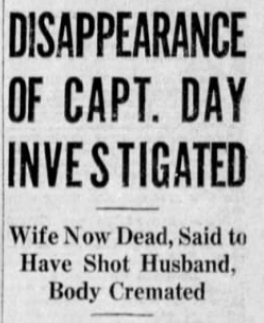

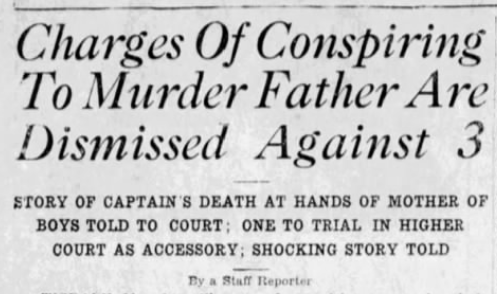
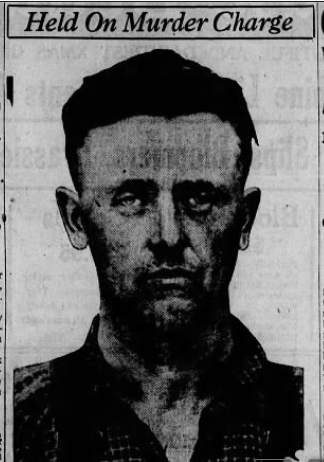


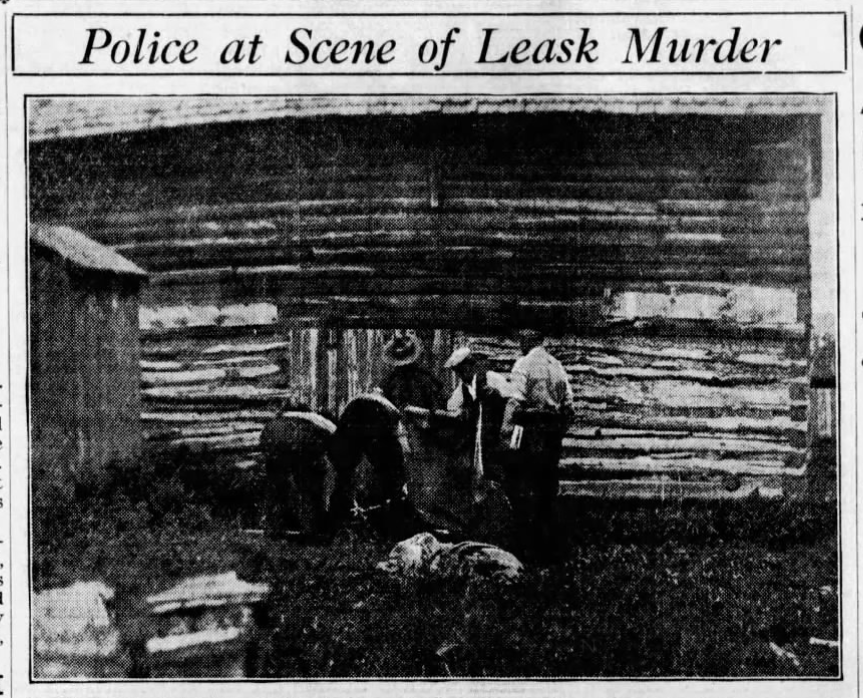
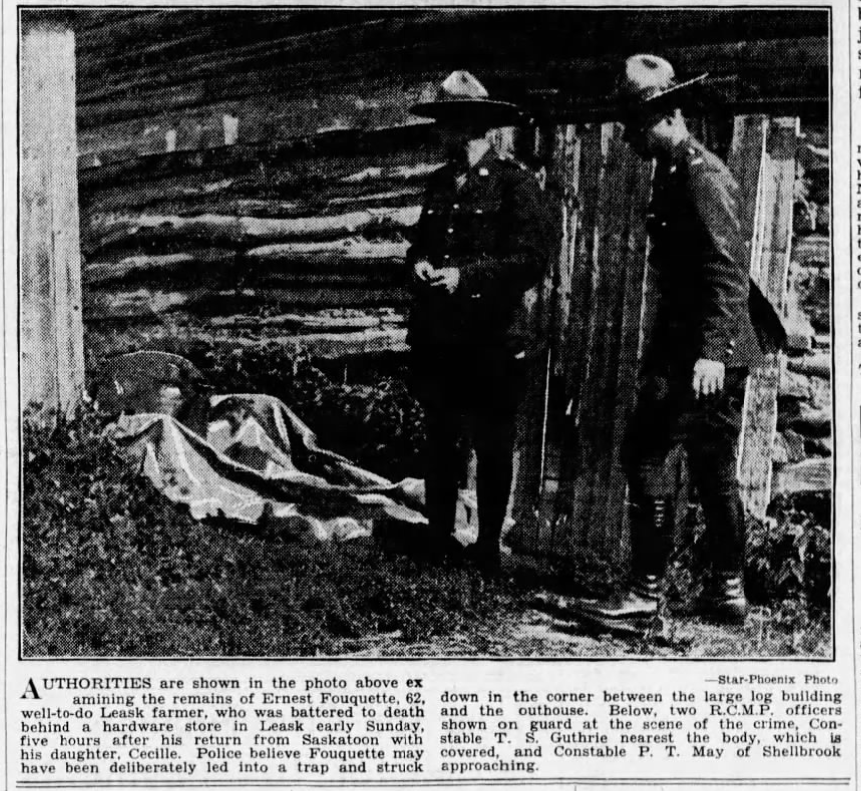
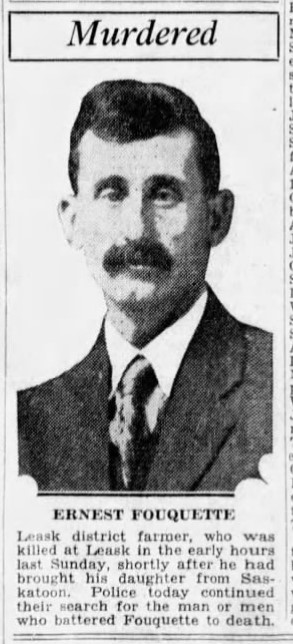

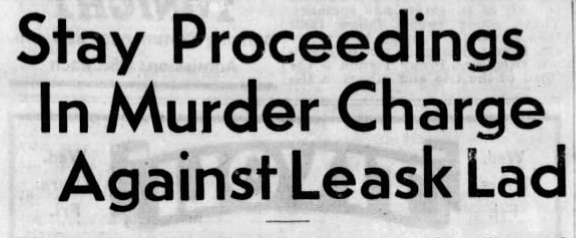

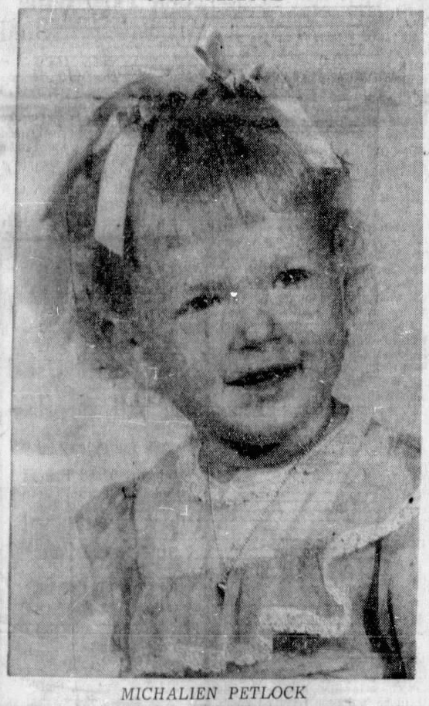





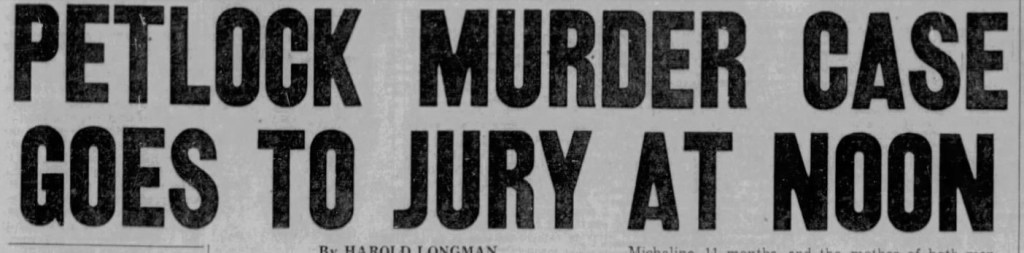


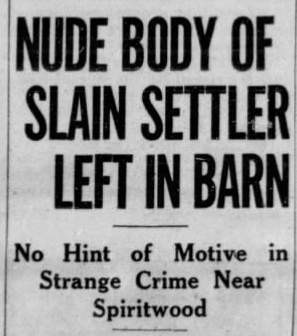


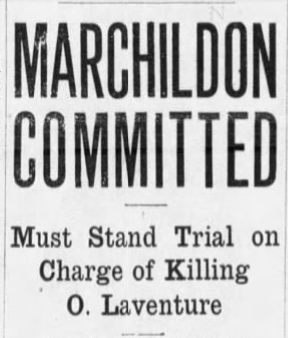


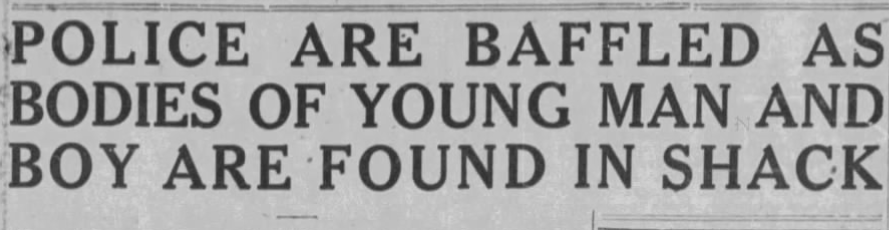





 Melanie Cole